

A complete guide to selecting EN ISO Workwear In UK
17/09/2025
7 Reasons to Choose the FR Coverall Supplier in Kuwait
17/10/2025
 Yash Agarwala
on
Yash Agarwala
on
Introduction
In the high-risk environment of the oil and gas industry, a single spark can have violent consequences. While safety protocols are strict, the last line of defense for your team is often the fabric on their back. But does their daily workwear protect them, or does it pose an even greater threat? The difference between life and death can come down to choosing flame-resistant (FR) clothing over standard uniforms.
Regular workwear, often made of cotton or polyester blends, can spark and continue to burn in a flash fire or arc flash event, effectively becoming fuel against the skin. FR clothing, on the other hand, is engineered to self-extinguish, providing critical seconds for escape and dramatically reducing the severity of burn injuries. At ACI Workwear, we help safety managers in the oil and gas sector understand that specifying compliant FR workwear isn't just about meeting regulations—it's a fundamental investment in your people's safety and your company's operational integrity.
What Exactly is Flame-Resistant (FR) Clothing?
Flame-resistant (FR) clothing is specialized protective workwear engineered from materials that are initially non-flammable or have been chemically treated to self-extinguish when the source of ignition is removed. Unlike regular fabrics that can melt or continue to burn, FR garments provide a crucial thermal barrier against heat and flame.
The primary function of fire-retardant workwear is not to be "fireproof" but to resist ignition and, most importantly, to stop burning once the initial fire source is gone. This self-extinguishing property prevents severe burns, giving workers precious time to react and move to safety. This is the core principle that makes it essential PPE for oil and gas workers.
How Does Regular Workwear Fail in Hazardous Environments?
Standard workwear actively contributes to injury in a fire-related incident. Garments made from common materials like cotton, polyester, or poly-cotton blends are flammable and will continue to burn even after the initial threat has passed, leading to extensive and severe body burns.
Worse yet, synthetic fibers like polyester and nylon will melt and fuse to the wearer's skin when exposed to strong heat. This causes serious thermal injuries that are incredibly difficult to treat. In a hazardous environment, a standard uniform is not just inadequate; it's a dangerous liability.
FR Clothing vs. Regular Workwear: What's the Real Difference?
The difference between flame resistant vs regular workwear goes far beyond the label. It's a matter of specialized engineering, compliance with strict safety standards, and life-saving performance under extreme conditions. Understanding these differences is critical for any procurement or safety manager.
Here’s a direct comparison of the key attributes:
| Feature | Flame-Resistant (FR) Clothing | Regular Workwear |
|---|---|---|
| Material Composition | Inherently FR fibers (e.g., Nomex®, Modacrylic) or treated fabrics. | Flammable materials like cotton, polyester, nylon, or blends. |
| Reaction to Flame | Self-extinguishes when the heat source is removed. Forms a protective char layer. | Ignites easily, continues to burn, and can melt onto the skin. |
| Protection Level | Specifically designed to protect against flash fires, arc flashes, and combustible dust. | Offers no protection against thermal hazards. It acts as fuel. |
| Compliance & Standards | Meets strict industry standards like NFPA 2112 and NFPA 70E. | Not rated or tested for flame resistance. |
| Durability | Engineered for industrial use, often with reinforced stitching and long-lasting FR properties. | Varies, but not designed for the rigors of hazardous environments. |
| Cost | Higher initial investment due to advanced materials and testing. | Lower upfront cost. |
| Primary Purpose | To save lives and minimize burn injury during a thermal event. | To provide basic comfort and coverage for non-hazardous work. |
Why is FR Clothing Non-Negotiable in the Oil & Gas Industry?
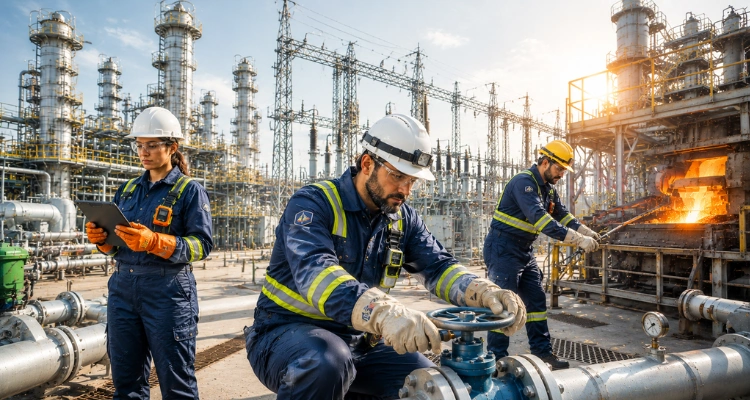
In the oil and gas industry, workers face the constant threat of sudden and intense thermal hazards. From wellheads to refineries, the risk of a flash fire—a rapidly moving flame front from the ignition of diffused flammable gases—is a daily reality. This is where industrial safety apparel becomes a critical lifeline.
A flashfire can last for only a few seconds, but temperatures can spike to over 1000°C. In that brief window, non-FR clothing can ignite and cause life-altering injuries. FR coveralls for oilfield workers are designed to not break open, melt, or drip, insulating the wearer from the intense heat and giving them the crucial time needed to escape the danger zone. Compliance with workplace safety standards isn't just red tape; it's a proven method for preventing tragedy.
What are the Key Safety Standards for FR Workwear?
Navigating protective workwear compliance requires understanding the key standards that govern heat and flame protection gear. For the oil and gas industry, two standards are supreme:
NFPA 2112: The Flash Fire Standard
This is the primary standard for flame resistant clothing used in industries with flash fire risks, like oil and gas. For a garment to be NFPA 2112 compliant, its fabric must pass a series of rigorous tests, including a complete manikin test. In this test, the garment is exposed to a simulated flash fire for three seconds, and the predicted body burn percentage must be 50% or less.
NFPA 70E: The Arc Flash Standard
While often associated with utilities, electrical hazards and the risk of arc flashes are prevalent in the oil and gas sector. NFPA 70E provides electrical safety and mandates the use of arc rated clothing based on a facility's hazard risk assessment. The clothing's Arc Thermal Performance Value (ATPV) must match or exceed the potential energy of a potential arc flash.
OSHA Compliance
The U.S. Occupational Safety and Health Administration (OSHA) legally mandates that employers protect their workers from workplace hazards. Specifically, OSHA 1910.269 requires employers in the oil and gas extraction and related fields to provide employees exposed to flames or electric arcs with FR clothing that follows industry standards.
How Do You Choose the Right FR Garments for Your Team?
Selecting the correct fire-resistant uniform involves more than just picking a catalog item. It requires a strategic approach to ensure maximum safety and user acceptance.
- Conduct a Thorough Hazard Assessment: The first step is to identify and quantify the specific thermal risks your team faces. Are they primarily exposed to flash fires, arc flashes, or both? This assessment will determine the required level of protection, such as the necessary ATPV rating for arc rated clothing.
- Prioritize Compliance and Certification: Always verify that the garments are certified to follow NFPA 2112 and/or NFPA 70E. Look for labels clearly stating compliance. Working with a reputable supplier like ACI Workwear ensures that all products are fully tested and certified.
- Consider Comfort, Fit, and Durability: FR clothing only works if it's worn correctly and consistently. Modern flame-resistant fabric technology has made garments lighter, more breathable, and more comfortable than ever. A proper fit is also important for safety and mobility.
- Establish a Proper Care and Maintenance Program: Improper laundering can degrade the FR properties of treated fabrics. Educate your team on the correct washing procedures—such as avoiding fabric softener and bleach—to ensure the garments maintain their protective integrity throughout their service life.
What is the True Cost of Non-Compliance?
Some may hesitate at the higher initial cost of FR workwear for the oil and gas industry. However, the cost of non-compliance is gradually greater and extends far beyond the price tag of a uniform.
- The Human Cost: The most serious cost is the human one. A single incident involving non-compliant workwear can lead to life-altering injuries or fatalities, profoundly impacting employees and their families.
- The Financial Cost: OSHA fines for non-compliance can run into hundreds of thousands of dollars. This is often compounded by high medical bills, workers' compensation claims, and the potential for civil litigation.
- The Operational Cost: A serious incident can trigger a complete shutdown of operations for investigation, leading to massive productivity losses and project delays.
- The Reputational Cost: In today's world, a poor safety record can destroy a company's reputation, making it difficult to attract talent, secure contracts, and maintain stakeholder trust.
When viewed through this lens, compliant flame-resistant clothing is not an expense but one of the most critical investments a company can make in its people, its performance, and its future.
Your Partner in Workplace Safety
Choosing the right protective workwear is a critical decision that should not be taken lightly. The difference between FR clothing and regular workwear is the difference between a close call and a major incident. It's about empowering your team with the confidence that they are protected by the best possible gear.
At ACI Workwear, we specialize in providing high-quality, fully compliant FR & Arc Resistant Clothing for the oil & gas industry and other hazardous sectors. We understand the unique challenges you face and are committed to being more than just a supplier—we are your safety partner.
- Need help evaluating your workplace hazards and selecting the right PPE? Schedule a free consultation with our safety experts.
- Know what you need to keep your team safe? Request a custom quote today and make compliance your priority.
FAQs
Read More:

Yash Agarwala
Associate Director – ACI Workwear
Yash Agarwala is a Associate Director at ACI Workwear, a company focused on manufacturing high-performance safety garments and industrial workwear. He is actively involved in scaling operations, improving manufacturing efficiency, and building global partnerships.