

7 Reasons to Choose the FR Coverall Supplier in Kuwait
17/10/2025
How does Arc Flash Clothing Protect Against Electrical Hazards
22/11/2025
 Yash Agarwala
on
Yash Agarwala
on

Yash Agarwala
Associate Director – ACI Workwear
Yash Agarwala is a Associate Director at ACI Workwear, a company focused on manufacturing high-performance safety garments and industrial workwear. He is actively involved in scaling operations, improving manufacturing efficiency, and building global partnerships.
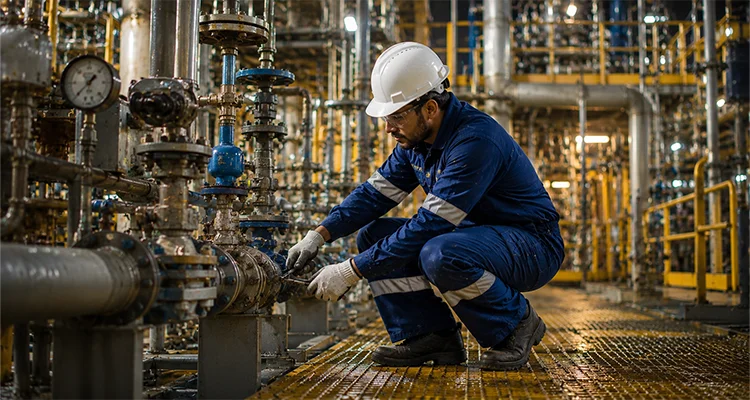
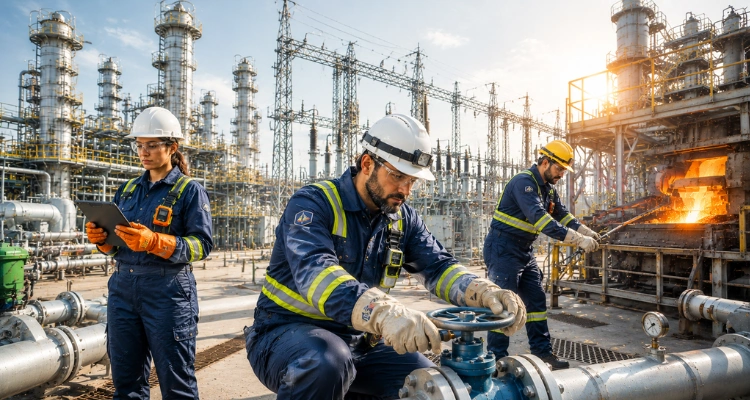
In the demanding and high-risk landscape of Saudi Arabia’s oil and gas industry, safety isn’t just a policy – it’s the fundamental base of sustainable operations. From the upstream drilling sites in the vast desert to the complex downstream refineries in Jubail and Yanbu, workers are continuously exposed to significant thermal hazards. The constant threat of flash fires, electrical arcs, and intense heat exposure makes personal protective equipment (PPE) the last and most critical line of defence.
This is where specialized Flame-Resistant Workwear Saudi Arabia‘s energy sector depends on becomes non-negotiable. For HSE Managers, Operations Supervisors, and Procurement Heads, selecting the right protective clothing is a critical decision that impacts not only compliance but the very lives of their workforce.
This guide explores the essential nature of Flame-Resistant (FR) and Basic Flame Resistant (IFR) workwear, the standards that govern them, and how to select the right supplier for your operations in the Kingdom.
Understanding the Core Safety Risks in Oil & Gas Industry
The operational environment in Saudi Arabia’s energy sector is characterized by the presence of flammable materials, high-pressure systems, and complex electrical infrastructure. Understanding these specific hazards is the first step in improving them.
- Flash Fires: A primary concern. A flash fire is a sudden, intense fire caused by the ignition of a diffuse fuel (like flammable gas or vapor). It happens rapidly (typically 3 seconds or less), but the intense heat is enough to cause fatal or life-altering burns if non-FR clothing (like cotton or polyester) ignites and continues to burn.
- Electrical Arc Flash: A dangerous electrical explosion resulting from a fault. An arc flash releases a huge amount of energy, heat (up to 20,000°C), and molten shrapnel. Arc flash and FR clothing is specifically designed to protect workers from the thermal impact of these events.
- Heat Exposure: Both ambient heat from the desert climate and radiant heat from industrial processes pose a risk. FR workwear must protect from external heat sources without trapping excessive body heat, which can lead to heat stress.
- Flammable Gases & Liquids: Leaks or splashes of flammable chemicals are a constant possibility in refineries and processing plants. The workwear must not become a fuel source if it comes into contact with these substances.
To manage these risks, global and local standards are mandatory. Compliance with NFPA 2112 (Standard on Flame-Resistant Garments for Protection of Industrial Personnel Against Flash Fire) and ISO 11612 (Clothing to protect against heat and flame) is the benchmark for quality oil & gas protective clothing.
What is Flame Resistant (FR) Workwear?
Flame-Resistant (FR) workwear is clothing specifically designed to resist ignition and self-destruction once the source of the flame is removed. This property is crucial: it doesn’t prevent fire, but it does prevent the clothing from continuing to burn, melt, or drip, thereby drastically reducing the severity of burn injuries.
It’s important to understand the two main categories of FR fabrics:
1. Inherently Flame Resistant (IFR) Fabrics
In IFR fabrics, flame resistance is an essential characteristic of the fiber itself. The molecular structure of the fiber (like Modacrylic, Aramid, or Nomex) is non-flammable.
- Protection: The FR properties are permanent and can never be washed out or worn away.
- Durability: Often provides a longer service life, maintaining its protective qualities throughout.
2. FR Treated Fabrics
These fabrics, typically cotton or cotton-blend, are treated with a chemical finish that imparts flame-resistant properties.
- Protection: The chemical treatment allows the fabric to char and self-extinguish when exposed to flame.
- Durability: The FR protection can be compromised by improper laundering (e.g., using bleach or fabric softeners) or may diminish after a high number of industrial wash cycles.
The choice between IFR fabric vs FR treated fabric often depends on the specific application, budget, and laundry processes available.
Why FR Workwear is necessary in Oil & Gas Operations
Using standard uniforms in a high-hazard environment is a critical failure of risk management. Flame retardant uniforms for workers are an active safety system.
- Immediate Fire Protection: The primary benefit. In a flash fire, FR clothing gives the wearer a crucial 3-5 seconds of protection to escape the immediate hazard area before the garment itself breaks down. It covers the skin and does not explode, which is the key difference between a minor injury and a huge one.
- Anti-Static Safety: In environments with flammable gases (like a refinery), a simple static spark can be dangerous. Much of the FR workwear designed for these zones also includes anti-static fibers (per EN 1149-5) to safely transfer static electricity and prevent an explosive source.
- Arc Flash Mitigation: For maintenance crews, electricians, and utility workers, Arc flash and FR clothing are essential. This specialized PPE is rated by its Arc Thermal Performance Value (ATPV) and is designed to handle the intense thermal energy of an electrical arc, preventing severe burns.
- Chemical and Heat Resistance: Many FR garments, particularly FR coveralls Saudi Arabia’s downstream sector uses, offer additional protection, such as resistance to chemical splash. This prevents hazardous liquids from soaking through to the skin.
- Durability in Harsh Environments: Durable oilfield coveralls are built to last. They resist the rips, tears, and abrasion common on drilling sites and during shutdowns, ensuring the protective barrier remains intact.
Key Features to Look for in FR Workwear
When selecting PPE for oil & gas workers Saudi Arabia, HSE and Procurement managers must look beyond the basic “FR” label.
- Compliance & Certifications: This is non-negotiable. Look for garments explicitly certified to NFPA 2112 (for flash fire) and NFPA 70E (for arc flash). Ensure the supplier provides clear documentation of certification from an independent lab.
- Fabric Quality & Type: Is it IFR or FR Treated? Does the fabric weight and composition match your hazard assessment?
- Breathability & Comfort: This is critical for workwear suitable for desert climates. A worker suffering from heat stress is a safety risk. Lightweight, breathable IFR fabrics can significantly improve comfort, focus, and compliance (workers are less likely to modify or remove uncomfortable PPE).
- Fit and Mobility: Garments should allow a full range of motion without being overly baggy (which can be a snag hazard) or too tight (which reduces the insulating air gap).
- Durability & Construction: Look for reinforced stitching (bar-tacks at stress points), heavy-duty zippers, and pocket construction designed for industrial use.
- High-Visibility: For many sites, high visibility of FR clothing is required to ensure workers are seen by vehicle and equipment operators, especially during night shifts or low-light conditions.
How ACI Workwear Serves the Saudi Arabia’s Oil & Gas Sector?
As a leading industrial safety workwear supplier, ACI Workwear understands the unique challenges of the Saudi and GCC markets. We are not just a vendor; we are a safety partner dedicated to protecting your most valuable asset-your people.
We specialize in the design and manufacture of high-performance protective workwear engineered for the toughest industrial environments.
- Complete Product Range: Our portfolio includes FR coveralls, Inherently FR suits, Arc flash and FR clothing, high-visibility jackets, and cold-weather protective gear. We provide full-body solutions.
- Engineered for the Environment: We design our garments to be durable enough for abrasive desert oilfields and breathable enough for the heat and humidity of coastal refineries. We combine safety with wearer comfort.
- Uncompromising Compliance: All ACI Workwear products follow or exceed stringent international standards, including NFPA 2112, NFPA 70E, and ISO 11612. We provide full transparency and documentation for your compliance records.
- Bulk Supply & Customization: We understand the needs of large-scale operations. ACI offers reliable bulk supply, private labeling, and customization (e.g., adding company logos, reflective tape, or specific pocket configurations) to fulfill your exact specifications, including standards that align with Saudi Aramco approved safety workwear requirements.
Use Scenarios: The Right FR Workwear for the Job
Different roles require different protection levels.
- Oilfield Drilling Sites: Workers need durable, breathable, and often high-visibility FR coveralls that offer reliable flash fire protection and mobility for physically demanding tasks.
- Refineries & Petrochemical Plants: Here, the risk is a combination of flash fire, chemical splash, and flammable atmospheres. Anti-static and flash fire protection garments are essential.
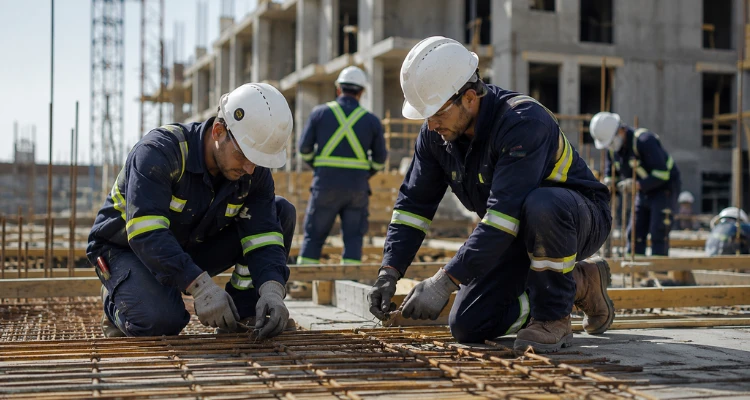
- Maintenance & Shutdown Crews: These teams face variable risks. They often require multi-norm garments offering protection from flash fire, arc flash, and chemical splash, along with high visibility FR clothing for working in busy or low-light areas.
Comparison: IFR vs. FR Treated Clothing
Feature | Inherently FR (IFR) Workwear | FR Treated Workwear |
Protection | FR properties are built into fiber. Cannot be washed out or worn off. | FR properties are applied as a chemical finish. |
Lifespan | Protection lasts for the entire life of the garment. | Protection can degrade with improper laundering (bleach, softeners) or after many washes. |
Comfort | Often lighter, softer, and more breathable. | Can be heavier and stiffer, though modern treatments have improved comfort. |
Durability | Excellent durability and high strength-to-weight ratio (e.g., Aramids). | Durability is good, often based on a strong cotton base fabric. |
Initial Cost | Higher | Lower |
Total Cost of Ownership | Often lower, due to longer service life and better durability. | May be higher over time if garments need to be replaced more frequently. |
Conclusion
In Saudi Arabia’s world-class energy sector, there is no scope for compromise on safety. The selection of Flame-Resistant Workwear in Saudi Arabia is a critical task that directly influences operational safety and corporate responsibility.
Choosing a supplier isn’t just about the garment; it’s about a partner who understands compliance, delivers durable and comfortable products, and can reliably meet the procurement demands of a fast-paced industry. ACI Workwear is that partner. We provide the certified, high-quality PPE for oil & gas workers Saudi Arabia‘s industry trusts to protect its teams from heat, fire, and arc flash hazards.
Frequently Asked Questions (FAQs)
1. What is the difference between NFPA 2112 and NFPA 70E?
NFPA 2112 is the standard for flash fire protection, designed for industries like oil and gas where flammable gases or vapors are present. NFPA 70E is the standard for electrical safety, and it specifies the arc flash and FR clothing (rated by ATPV) required to protect workers from electrical arc flashes.
2. How long do FR coveralls last?
The lifespan depends on the fabric (IFR vs. FR Treated), the harshness of the work, and how it’s laundered. IFR garments generally last longer (2-3 years) as their protection doesn’t wash out. FR Treated garments may last 12-18 months, depending on wash cycles. Garments should be retired immediately if they are ripped, torn, or contaminated.
3. How do you properly wash FR workwear?
Always follow the manufacturer’s care label. Generally:
- Wash separately.
- Do NOT use chlorine bleach or fabric softeners, as they can degrade the FR treatment.
- Use standard detergent and warm water.
- Tumble dry on low or medium heat.
4. What is the main difference between “Flame Resistant” (FR) and “Flame Retardant”?
These terms are often used interchangeably. Flame Resistant (or Inherently FR) means the material itself is non-flammable. Flame Retardant (or FR Treated) means the material has been chemically treated to be self-extinguishing. Both are types of clothing.
5. Why is anti-static so important for FR clothing in refineries?
In areas with flammable vapors (like refineries or fuel depots), a tiny spark from static electricity can cause an explosion. Anti-static FR clothing has conductive fibers woven in that safely dissipate static charge, preventing the wearer from becoming an ignition source.
6. Does ACI Workwear supply to Saudi Arabia’s Eastern Province?
Yes. ACI Workwear is an experienced industrial safety workwear supplier with a robust supply chain capable of serving all major industrial hubs in Saudi Arabia, including Dammam, Al Khobar, Jubail, and Dhahran, as well as the wider GCC region.