

How to Choose the Right Industrial Workwear Manufacturer in India
09/04/2026
How to Conduct a Workplace PPE Audit: A Step-by-Step Guide for Safety Managers
28/05/2026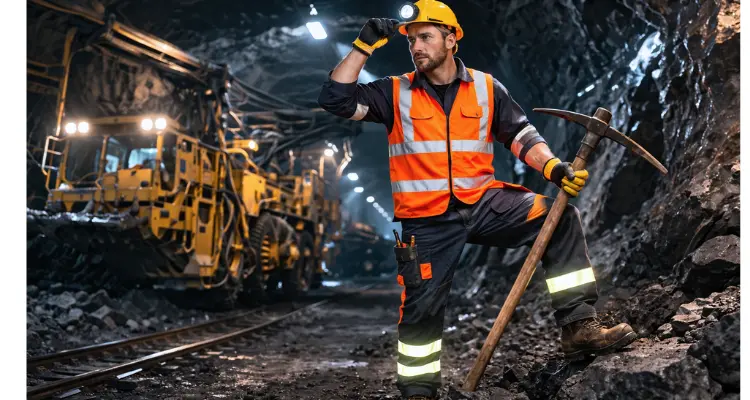
 Yash Agarwala
on
Yash Agarwala
on

Yash Agarwala
Associate Director – ACI Workwear
Yash Agarwala is a Associate Director at ACI Workwear, a company focused on manufacturing high-performance safety garments and industrial workwear. He is actively involved in scaling operations, improving manufacturing efficiency, and building global partnerships.
Selecting the right protective gear is the most critical step in ensuring the safety of underground and surface miners. High-quality mining PPE acts as the final line of defense against hazardous dust, falling debris, chemical splashes, and thermal accidents.
For global operations, partnering with a reliable Industrial Workwear Manufacturer, ACI Workwear ensures that every garment meets strict international safety standards. This guide provides a comprehensive breakdown of the essential gear required to keep miners safe and compliant.
Key Takeaway
- Layered Defense: Effective mining safety depends on combining high-visibility, flame-resistant, and durable apparel.
- Certification Matters: Only use gear from a Certified safety clothing exporter to ensure compliance with EN and NFPA standards.
- Daily Vigilance: A 5-minute daily inspection of zippers, seams, and reflective tape can prevent major injuries.
- Environment Specifics: Deep underground mines require Arc flash protective clothing, while high-altitude sites need Cold Storage & Freezer Workwear.
- Contamination Control: Keeping FR garments free of oil and grease is essential to maintaining their self-extinguishing properties.
What is the basic PPE required for mining?
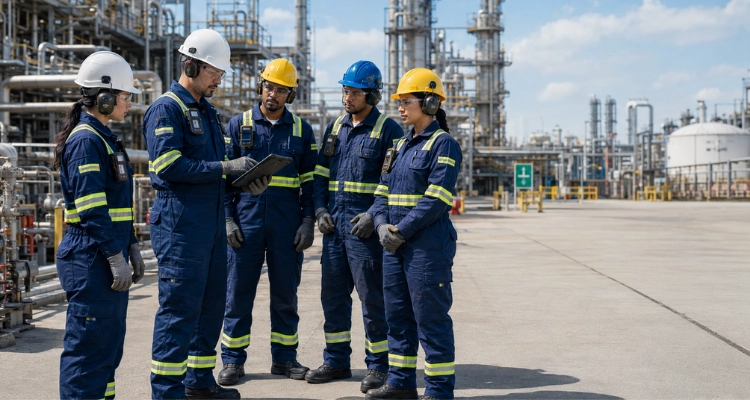
The basic PPE for mining includes head protection, high-visibility clothing, specialized gloves, and steel-toe boots. These items are designed to mitigate the high-risk nature of mining environments, where visibility is low, and physical hazards are constant.
A Certified safety clothing exporter provides standardized gear that addresses these specific environmental stressors. Whether you are operating a surface quarry or a deep underground shaft, the following components are non-negotiable for worker safety.
Essential Mining Gear Components:
- Safety Helmets: Must feature lamp brackets and be impact-rated for falling objects.
- High-Visibility Apparel: Fluorescent vests or coveralls with retro-reflective tape.
- Protective Footwear: Steel or composite toe boots with puncture-resistant mid-soles.
- Respiratory Protection: Masks or self-contained self-rescuers (SCSR) for dust and gas.
- Hand Protection: Heavy-duty impact and vibration-resistant gloves.
Why is high-visibility clothing necessary
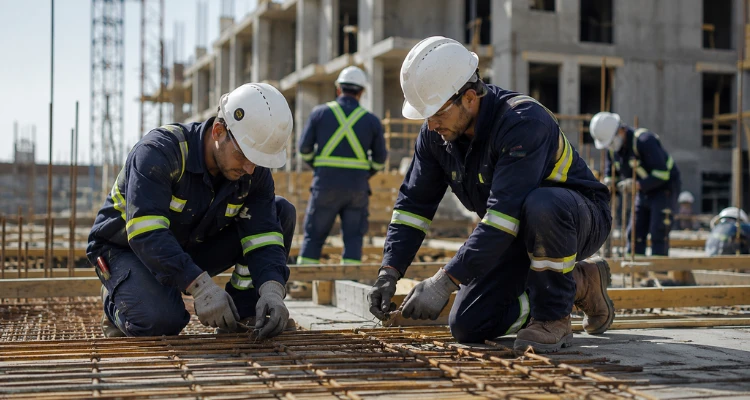
High-visibility clothing is necessary because mines are often low-light environments where vehicle-to-pedestrian accidents are a major risk. By reflecting light back to machinery operators, these garments significantly reduce the likelihood of collisions.
As a leading Supplier of High Visibility Safety Apparel, we ensure that garments utilize high-performance silver reflective tapes. These tapes are designed to remain visible even when covered in a light layer of coal or mineral dust.
Key features of mining hi-vis gear:
- 360-Degree Visibility: Reflective strips must be placed on the arms, legs, and torso.
- Color Standards: Typically, Safety Orange or Lime Yellow to provide maximum contrast.
- Durability: The fabric must withstand industrial laundering without losing its reflective properties.
How does flame-resistant (FR) clothing protect miners?
Flame Resistant (FR) Clothing protects miners from flash fires and electric arc flashes by refusing to support combustion. In a mining environment, methane gas pockets or electrical faults can cause sudden thermal events; FR clothing prevents the fabric from melting onto the skin.
As a Flame Resistant (FR) Clothing Manufacturer, ACI Workwear utilizes specialized fabrics that provide a thermal barrier. This barrier buys the worker for critical seconds to escape the heat source without sustaining life-threatening burns.
Comparison: Standard Workwear vs. FR Clothing
|
Feature |
Standard Industrial Uniform |
Flame Resistant (FR) Clothing |
|
Material |
Polyester/Cotton Blends |
Treated Cotton or Inherent Fibers |
|
Fire Reaction |
Melts and drips onto skin |
Self-extinguishes when flame is removed |
|
Durability |
High abrasion resistance |
High abrasion + Thermal protection |
|
Common Use |
Construction & Agriculture |
Oil & Gas, Mining, Steel Plants |
What are the standards for safety clothing?
Safety clothing must be certified by international bodies to ensure it can actually withstand the hazards it claims to protect against. These standards govern everything from the strength of the seams to the electrical resistance of the fabric.
As a Certified safety clothing exporter, we ensure our products meet the following global benchmarks:
- EN ISO 11612: Protection against heat and flame.
- EN ISO 20471: High-visibility clothing testing and requirements.
- NFPA 2112: Standard on flame-resistant garments for protection of industrial personnel.
- ASTM F1506: Performance specification for flame-resistant and arc-rated textile materials.
Need a Compliance Audit? Our team helps you select the right certification level for your specific mining site. Request a Quote Today.
How to choose workwear for cold mining environments?
Mining cold climates or high altitudes requires Cold Storage & Freezer Workwear techniques. This involves multi-layered systems that provide insulation while remaining breathable enough to prevent moisture buildup, which can lead to hypothermia.
Thermal coveralls designed for miners often feature water-repellent outer shells and quilted inner linings. These allow for a full range of motion while maintaining core body temperature in sub-zero conditions.
Daily Mining PPE Inspection Checklist
To maintain safety, every miner should follow a daily inspection routine before entering the site. This ensures that the equipment has not been compromised by previous shifts.
- Hard Hat – Check for cracks, dents, faded color (UV degradation), and intact suspension
- Eye Protection – Inspect lens clarity, check for scratches or cracks, confirm anti-fog coating is intact
- Respirator – Check seal integrity, filter expiry date, and valve function; replace filters per manufacturer schedule
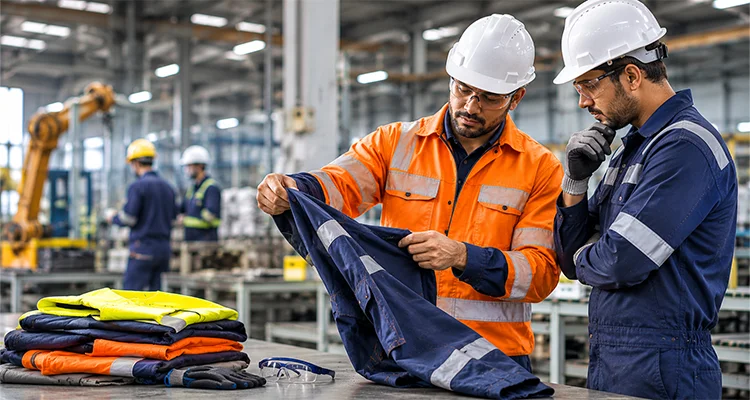
- FR Coveralls – Look for burns, tears, charred areas, or missing retroreflective strips; never use a damaged FR garment
- Hi-Vis Vest/Jacket – Confirm retroreflective tape is not peeling, faded, or obscured by dirt
- Gloves – Check for holes, worn fingertips, chemical staining, or loss of grip texture
- Safety Boots – Inspect soles for wear, check steel-toe cap integrity, confirm no chemical damage to uppers
- Hearing Protection – Ensure earplugs are clean and not hardened; check earmuff cushions for cracks or compression loss
- Self-Rescuer (Underground) – Verify seal is intact and device has not been activated or expired
- Fall Arrest Harness – Inspect webbing for cuts or fraying, check buckles and D-rings for corrosion or deformation
What is arc flash protection in mining?
Arc flash protective clothing is a specialized category of FR gear designed to protect electricians and machinery operators from the explosive release of energy caused by an electrical fault. These garments are rated by their Arc Thermal Performance Value (ATPV).
A reputable Industrial Workwear Exporter will provide different “categories” of arc flash gear, ranging from lightweight daily-wear shirts to heavy-duty multi-layer suits for high-voltage tasks.
Why are sustainable workwear solutions important?
Sustainable industrial workwear solutions focus on the longevity and environmental impact of clothing. By using high-tensile fibers and eco-friendly manufacturing processes, companies can reduce the frequency of gear replacement, leading to less textile waste.
Investing in durable, high-quality gear from a dedicated Industrial Workwear Manufacturer is inherently more sustainable than purchasing “disposable” low-cost alternatives that fail after a few weeks of use.
How to clean and maintain mining PPE?
Proper maintenance is the only way to ensure the safety properties of your gear remain intact over its lifecycle. Improper washing can destroy the chemical treatments that make clothing flame-resistant.
- Avoid Softeners: Fabric softeners can leave a flammable coating on the fibers.
- Temperature Control: Wash at the recommended temperature to prevent shrinking and fiber damage.
- Inspection After Wash: Always re-inspect the reflective tape after cleaning to ensure it hasn’t lost its luster.
Ready to upgrade your safety standards? ACI Workwear provides solutions to your specific needs. Explore Our Products.
Conclusion
The complexities of mining environments demand more than just standard clothing; they require engineered safety solutions. By integrating high-performance fabrics with strict international certifications, mining operations can mitigate risks and enhance worker productivity.
As a leading Industrial Workwear Manufacturer, ACI Workwear is committed to providing the global mining industry with durable, certified, and innovative protective apparel. Our expertise as an Industrial Uniform Exporter ensures that no matter where your site is located, your team remains protected by the best technology available.
Would you like to discuss a customized workwear program for your workforce? Contact our safety experts for a consultation.
Frequently Asked Questions
1. What is the primary role of an Industrial Workwear Manufacturer?
An Industrial Workwear Manufacturer designs and produces garments that meet specific industrial safety standards, ensuring fabrics withstand physical and thermal stresses.
2. Why should mining companies buy from a Certified Safety clothing exporter?
A Certified safety clothing exporter ensures products have passed third-party testing to meet international regulations, providing critical liability protection and worker safety.
3. What makes Flame Resistant (FR) Clothing different from regular cotton?
Flame Resistant (FR) Clothing is made of fibers that are self-extinguished when the heat source is removed, whereas regular cotton continues to burn and melt.
4. How does High Visibility Safety Apparel prevent accidents in surface mining?
It uses fluorescent colors and retro-reflective tape to ensure machinery operators can spot ground personnel from a distance, even in dusty or dark conditions.
5. What are Sustainable Industrial Workwear Solutions?
These solutions focus on using recycled materials and creating long-lasting garments to reduce environmental impact and lower the total cost of ownership.
6. Can an Industrial Workwear Exporter handle custom branding?
Yes, a professional Industrial workwear exporter can add company logos using specialized FR threads that do not compromise the safety ratings of the clothing.
7. How often should mining PPE be inspected?
Mining PPE should be inspected at the start of every shift and after every industrial wash to check for fabric degradation or loss of visibility.
Read More: