

How does Arc Flash Clothing Protect Against Electrical Hazards
22/11/2025
How High-Visibility Clothing Reduces Accidents on Worksites: 5 Key Benefits You Should Know
22/12/2025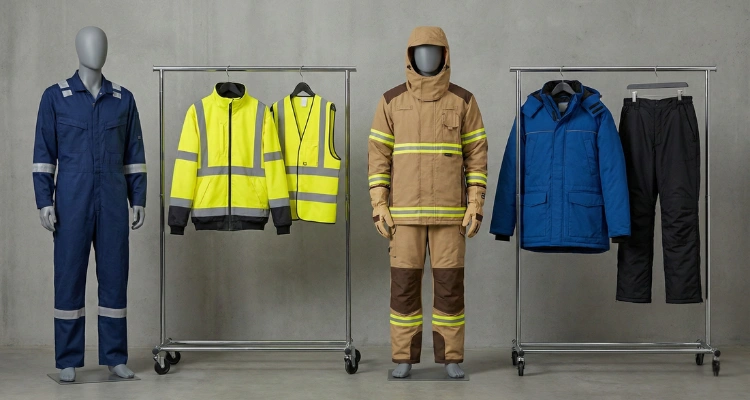
Finding the right workwear supplier in Germany isn’t just about comparing prices. In a country known for Made in Germany precision and some of the strictest industrial safety regulations in the world (DIN standards), your choice of supplier directly impacts your workforce’s safety and your company’s legal compliance.
Whether you are in the automotive sector in Stuttgart, the chemical hubs of the Ruhr, or managing offshore wind farms in the North Sea, sourcing high-quality Personal Protective Equipment (PPE) is a critical operational decision.
This guide details exactly how to vet, select, and partner with a workwear manufacturer that meets German standards even if you are sourcing globally.
What Defines a Good Workwear Supplier for the German Market?
A reliable workwear supplier for the German market must possess valid EU certifications (CE Marking), demonstrate supply chain transparency, offer customization for corporate identity, and guarantee consistent fabric quality. They should bridge the gap between cost-efficiency, and the rigorous safety demands of industries like Oil & Gas and Construction.
For companies like ACI Workwear, meeting these high bars isn’t optional; it’s the baseline for doing business in Europe.
Why Compliance is Non-Negotiable
In Germany, liability is a serious matter. If a piece of FR & Arc Resistant Clothing fails during an electrical incident, the procurement team can be held accountable.
When evaluating a supplier, you are looking for more than a catalog; you are looking for a risk management partner.
5 Key Factors to Evaluate When Sourcing Industrial Workwear
1. Certification and Adherence to EN Standards
Does the supplier understand the specific EN ISO standards required for your industry? A generic safety vest won’t cut it on a German construction site.
Your supplier must provide documentation for:
- EN ISO 20471: For High Visibility Clothing.
- EN ISO 11612: For protection against heat and flames.
- EN 343: For protection against rain (crucial for outdoor infrastructure projects).
- EN 342: For Cold Protective/Freezer Clothing.
Ask for current test reports, not just certificates. A proactive manufacturer like ACI Workwear will have these readily available for their General Workwear and specialized lines.
2. Fabric Quality and Durability
German buyers value longevity. Workwear that fades, shrinks, or tears after ten washes will damage your brand image and increase long-term replacement costs.
Look for suppliers who use:
- High-performance blends: Cotton-polyester for durability vs. comfort.
- Modacrylics: For permanent flame resistance in FR clothing.
- Reinforced stitching: Triple stitching in high-stress areas (crotch, underarms).
3. Customization Capabilities (Private Label)
In the German B2B market, Corporate Identity (CI) is massive. Your technicians aren’t just workers; they are brand ambassadors.
Can the supplier handle:
- Pantone color matching?
- Logo embroidery vs. heat transfer printing?
- Custom sizing charts (German sizing differs significantly from Asian or US sizing)?
4. Sustainability and Supply Chain Transparency
Germany is a leader in the ESG (Environmental, Social, and Governance) movement. Under the German Supply Chain Due Diligence Act (LkSG), larger companies must ensure their suppliers respect human rights and environmental standards.
Choosing a transparent manufacturer who can prove ethical labor practices helps you stay compliant with German law.
5. Logistics and Lead Times
Whether you are ordering Active Wear for a logistics team or heavy-duty coveralls for Mining & Metal Processing, timing is everything.
- Does the supplier have experience exporting to the EU?
- Do they understand German customs procedures (Zoll)?
- Can they offer DDP (Delivered Duty Paid) terms to simplify your life?
Direct Manufacturer vs. Local Wholesaler: Which is Better?
This is the biggest dilemma for procurement managers. Should you buy from a local German distributor or go direct to a manufacturer (often based in textile hubs like India)?
Buying from a Local German Wholesaler
- Pros: Same time zone, German language support, smaller Minimum Order Quantities (MOQs).
- Cons: Significantly higher costs (markups can be 30-50%), limited customization options, slower reaction time to design changes.
Buying Direct from a ACI Workwear
- Pros: Factory-direct pricing (huge savings for bulk orders), full control over design and fabric, ability to scale production for large Automotive & Manufacturing workforces.
- Cons: Higher MOQs, longer shipping times (requires planning).
The Hybrid Approach
Many smart German businesses are now partnering with export-oriented manufacturers like ACI Group who have specific experience serving the European market. You get the quality and compliance of a local supplier with the cost benefits of direct sourcing.
Comparison: Distributor vs. Manufacturer
| Feature | Local German Distributor | Direct Manufacturer (ACI) |
| Cost Per Unit | High (Includes middleman margin) | Low (Factory direct pricing) |
| Customization | Limited to standard catalog | Fully customizable (Design, Fabric, Fit) |
| MOQ | Low (10-50 units) | Medium/High (500+ units) |
| Compliance | Varies (They rely on their vendors) | High (Direct control over certification) |
| Ideal For | Small teams, urgent needs | Large enterprises, uniform programs |
Key Trends in the German Workwear Market (2025)
To choose the right supplier, you need to know what the market demands right now.
1. Multifunctional Safety Wear
Workers in Energy & Power Generation often face multiple hazards. They don’t just need high-vis; they need high-vis that is also anti-static and arc-flash rated. Suppliers must be able to combine standards (e.g., EN ISO 20471 + EN 1149).
2. Workleisure Aesthetics
The line between industrial workwear and activewear is blurring. Workers want Active Wear fabrics – moisture-wicking, stretchable, and breathable even in heavy industry. A modern supplier should offer functional designs that look good enough to wear off-site.
3. Sustainable Textiles
Recycled polyester and organic cotton are in high demand. If your company has Green Goals, your workwear supplier needs to support them with eco-friendly fabric options.
When to Walk Away from a Supplier
Not every manufacturer is ready for the German market. Watch out for these warning signs:
- Universal Certificates: If they send a blurry certificate that looks 5 years old or belongs to a different company.
- Vague Fabric Details: If they can’t tell you the GSM (grams per square meter) or the specific composition of the fabric.
- No Traceability: If they cannot tell you where their raw cotton comes from.
- Ignoring Sizing Differences: If they insist their “Asian L” fits a “German L” (it won’t).
How ACI Workwear Supports German Industries?
At ACI Workwear, we understand that German industry is the engine of Europe. We don’t just stitch clothes; we engineer safety solutions.
We specialize in manufacturing high-performance apparel for:
- Oil & Gas: Flame retardant coveralls that withstand harsh offshore conditions.
- Construction: High-visibility jackets that ensure safety in low-light German winters.
- Cold Storage: Thermal wear designed for sub-zero logistics hubs.
Our manufacturing processes are aligned with global standards, ensuring that when you open a shipment in Hamburg or Munich, the quality is exactly what you approved.
Conclusion: Safety Meets Efficiency
Choosing the right workwear supplier in Germany is a balance of safety, cost, and reliability. You need a partner who treats your deadlines as seriously as you treat your safety protocols.
Whether you are looking for high-volume General Workwear or specialized Arc Flash protection, the right manufacturing partner can reduce your procurement headaches and keep your team safe.
Don’t compromise on safety.
Contact ACI Workwear Today for a free consultation and a custom quote for your industrial needs.
Ready to upgrade your workforce safety? Explore Our Product Catalog to see our full range of industrial apparel.
Frequently Asked Questions (FAQs)
1. What certifications are mandatory for workwear in Germany?
The most common are CE Marking (mandatory for PPE), EN ISO 20471 for high visibility, and EN ISO 11612 for heat and flame protection. Employers are legally required to provide compliant PPE.
2. Can I import workwear directly to Germany?
Yes. However, you must ensure the goods meet EU safety standards and REACH regulations (chemical safety). Working with an experienced exporter like ACI ensures this compliance checks are handled at the manufacturing stage.
3. What is the typical lead time for custom workwear orders?
For custom manufacturing, lead times generally range from 60 to 90 days, including fabric production, stitching, and shipping by sea. Air freight can reduce this but increase costs.
4. How do I verify the quality of a supplier before placing a large order?
Always request a Pre-Production Sample (PPS). This is a prototype made to your exact specifications. Do not authorize mass production until the PPS has been tested and approved by your safety team.
5. Does ACI Workwear offer private labeling?
Yes. We offer complete private label services, including custom tagging, logo embroidery, and packaging, allowing you to build your internal brand identity.
