

FR Clothing vs Fire Retardant Clothing: Understanding the Primary Difference
02/03/2026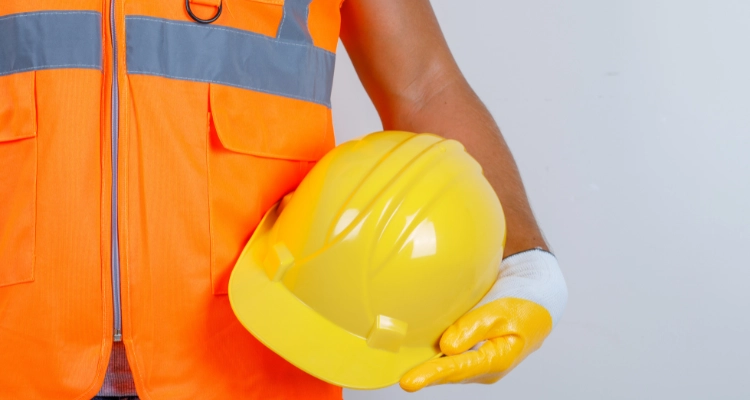
Introduction
The primary goal of safety workwear in construction is to provide a robust physical barrier against high-impact site hazards, extreme thermal fluctuations, and low-visibility conditions. Choosing a certified Industrial Workwear Manufacturer ensures that every garment is engineered to meet rigorous international safety standards, providing maximum protection for the modern workforce.
On a high-risk construction site, the right apparel does more than just identify a worker; it actively mitigates the life-threatening risks associated with heavy machinery, falling debris, and unpredictable environmental exposure.
As a leading Certified safety clothing exporter, ACI Workwear focuses on delivering durability and precision, ensuring that safety managers can trust their gear to function perfectly in the moments it matters most.
Reliable workwear is not just a requirement; it is a critical component of professional industrial infrastructure and long-term operational success. High-performance fabrics and ergonomic designs further ensure that safety does not come at the cost of mobility or efficiency on-site.
Key Takeaways
- Primary Defense: Safety workwear serves as the essential final barrier against impacts, thermal threats, and site accidents.
- Certified Quality: Partnering with a Certified safety clothing exporter ensures all gear meets EN or ANSI performance benchmarks.
- Visibility Standards: High-visibility apparel is mandatory for preventing “struck-by” incidents in low-light or high-traffic zones.
- Thermal Protection: Specialized Flame Resistant (FR) Clothing is critical for welding, grinding, and electrical work.
- Climate Adaptability: Proper gear, including Cold Storage & Freezer Workwear, maintains worker health in extreme temperatures.
- Lifecycle Management: Regular inspections and timely replacement are required to maintain the integrity of protective fabrics.
- Industry Specificity: Protection levels must be tailored to specific sectors like Oil & Gas, Mining, or Steel manufacturing.
Why Is Safety Workwear Essential for Construction Workers?
Construction sites combine multiple simultaneous hazards to fall from heights, machinery contact, chemical exposure, and visibility challenges. Safety workwear acts as engineered protection against these dangers, creating a physical barrier between workers and occupational hazards.
Proper protective equipment doesn’t just prevent injuries; it demonstrates OSHA compliance, reduces organizational liability, and improves worker morale. When construction teams wear certified safety apparel from trusted suppliers, they signal a commitment to workplace safety culture that extends beyond equipment to organizational values.
A reputable industrial workwear manufacturer ensures each piece meets or exceeds safety certifications, providing confidence that your team is protected by equipment tested against real-world construction hazards.
Essential Safety Workwear Items for Construction Workers
Construction safety workwear falls into distinct functional categories. Here’s what every construction site requires:
1. Head Protection: Hard hats protect against falling objects and impact injuries. Modern construction helmets include suspension systems that absorb shock and distribute impact force. Look for hats certified to ANSI Z89.1 standards with adjustable sizing for all team members.
2. Eye & Face Protection: Safety glasses, face shields, and welding helmets shield against flying debris, chemical splashes, and arc flash hazards. Arc flash protective clothing extends head protection when electrical hazards are present.
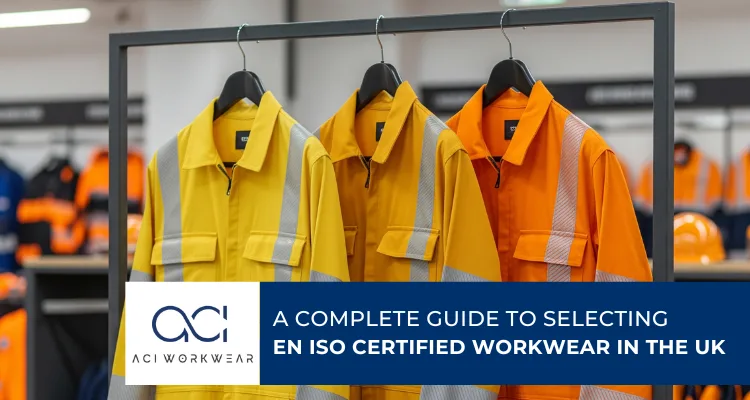
3. High-Visibility Safety Apparel: Yellow and orange vests, jackets, and shirts to ensure workers remain visible to equipment operators in low-light conditions. High-visibility apparel significantly reduces struck-by accidents. Safety workwear suppliers recommend Class 2 or Class 3 garments depending on site traffic and lighting conditions.
4. Hand Protection: Gloves protect against cuts, abrasions, chemical exposure, and thermal hazards. Leather gloves suit material handling, nitrile gloves provide chemical resistance, and specialized gloves protect against machinery contact.
5. Foot Protection: Steel-toed boots prevent crush injuries and puncture wounds. Modern safety footwear combines protective features with comfort for all-day wear—critical since construction workers spend 8+ hours daily on-site.
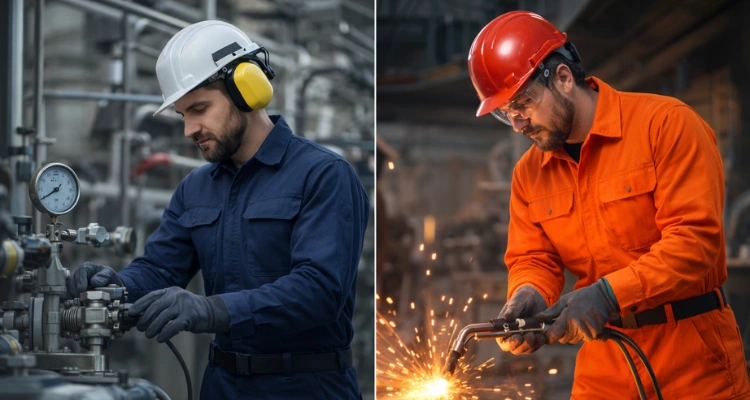
6. Body Protection: Flame-resistant (FR) clothing is mandatory in welding and hot-work environments. FR garments prevent severe burns when exposed to flash flames or electric arcs. A certified flame resistant (FR) clothing manufacturer ensures garments maintain protection throughout their lifespan.
7. Respiratory Protection: Dust masks, respirators, and supplied air systems protect against airborne hazards. Selection depends on specific contaminants—dust, fumes, or gases—present on-site.
What Safety Standards Apply to Construction Workwear?
1. ANSI Standards: The American National Standards Institute establishes benchmarks for safety equipment:
- ANSI Z89.1: Hard hat specifications
- ANSI Z87.1: Eye protection requirements
- ANSI Z41.1: Foot protection standards
2. OSHA Requirements: OSHA 29 CFR 1910.132-138 mandates employers assess job hazards and provide appropriate PPE at no cost to employees. This is a legal requirement, not a suggestion.
3. NFPA Standards: The National Fire Protection Association governs flame-resistant clothing through NFPA 70E (electrical safety) and NFPA 2112 (arc flash protective clothing). These standards ensure that FR clothing provides adequate protection in high-risk environments.
4. International Certifications: Global industrial uniform exporters must meet ISO standards:
- ISO 11611: Protective clothing for arc flash hazards
- ISO 14116: Clothing with limited flame spread
- ISO 20471: High-visibility clothing requirements
A certified safety clothing exporter like ACI Workwear ensures all garments comply with these international standards, giving construction companies confidence in their protective equipment.
How Do You Choose the Right Safety Workwear for Your Construction Project?
Selecting appropriate workwear involves assessing specific site hazards and matching them to protective equipment.
Step 1: Conduct a Hazard Assessment: Document all potential risks on your site. Fall risks, machinery contact, chemical exposure, visibility challenges, and electrical hazards each demand different protective strategies.
Step 2: Identify Required PPE Categories: Based on identified hazards, determine which workwear categories apply. A mining operation requires different protection than a building construction site.
Step 3: Select Appropriate Protection Levels: Safety workwear comes in varying protection levels. High-visibility apparel classifications range from Class 1 (minimal coverage) to Class 3 (maximum visibility). Choose the level matching your site conditions.
Step 4: Verify Certifications: Confirm workwear carries relevant safety certifications. Labels should clearly display standard compliance, manufacturing date, care instructions, and manufacturer details.
Step 5: Ensure Proper Fit and Comfort: Ill-fitting workwear compromises safety and worker compliance. Workers wearing uncomfortable equipment tend to remove it, eliminating protection. Modern industrial workwear balances protective function with comfort through breathable materials and ergonomic design.
Comparison: Safety Workwear Options for Construction
| Workwear Category | Primary Hazard | Protection Standard | Key Features |
| Hard Hats | Falling objects | ANSI Z89.1 | Suspension system, adjustable sizing |
| High-Visibility Vests | Struck-by accidents | Class 1–3 | Reflective striping, breathable fabric |
| Flame-Resistant Clothing | Arc flash/flames | NFPA 70E, ISO 11611 | Self-extinguishing, rated calorie protection |
| Safety Footwear | Crush/puncture injury | ANSI Z41.1 | Steel toe, puncture-resistant sole |
| Chemical-Resistant Gloves | Chemical exposure | EN 388/374 | Nitrile or butyl material |
| Respiratory Protection | Airborne contaminants | NIOSH-certified | Filter type matches specific hazard |
How Do Industry-Specific Hazards Affect Workwear Requirements?
1. Mining Operations: Mining sites combine darkness, chemical exposure, and equipment contact. High-visibility safety apparel is critical, while chemical-resistant workwear protects against mineral dust. A specialized industrial workwear manufacturer understands mining-specific durability requirements.
2. Oil & Gas Construction: Oil and gas environments present extreme thermal risks and electrical hazards. Flame-resistant (FR) clothing and arc flash protective clothing are non-negotiable. Workwear must withstand harsh chemicals while maintaining flexibility.
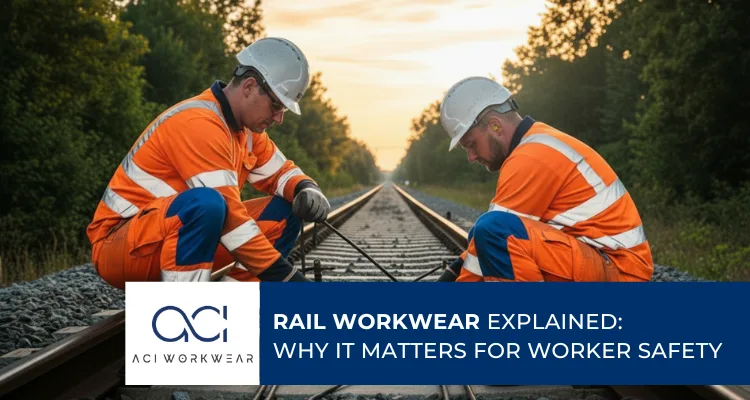
3. Railway Construction: Railway projects demand high-visibility safety apparel due to train traffic. Bright orange and yellow garments with reflective striping ensure visibility in all weather conditions.
4. Steel Manufacturing: Steel production involves intense heat and arc flash risks. Flame-resistant (FR) clothing rated for high-calorie environments (8–40+ cal/cm) maintains protection across multiple wear cycles, offering lifecycle value.
5. Chemical Processing: Chemical plants demand chemical-resistant workwear. Regular cotton absorbs chemicals, increasing exposure risk. Specialized protective apparel resists chemical penetration during accidental spills.
6. Construction: Electrical hazards require arc flash protective clothing rated to calculate incident energy levels (HRC 0–4). Industrial workwear must match the specific hazard risk category.
7. Cold Storage & Agriculture: Construction in cold environments demands insulated workwear. Modern cold storage & freezer workwear incorporates thermal insulation while maintaining breathability, preventing frostbite during extended exposure.
How Should You Inspect and Maintain Safety Workwear?
Proper maintenance extends workwear lifespan and ensures continuous protection.
1. Pre-Shift Inspection Checklist
- Hard hat: Check for cracks, suspension system damage, proper fit
- High-visibility apparel: Inspect reflective striping for fading or damage
- Footwear: Examine soles for punctures, treads for wear
- Gloves: Look for tears, deterioration, or chemical contamination
- FR clothing: Confirm no burns, stains, or material breakdown
- Respiratory equipment: Verify filter condition and mask seal
2. Cleaning and Care Guidelines
Most industrial workwear is machine washable. However, FR clothing requires special attention:
- Wash flame-resistant garments separately to prevent contamination
- Use mild detergents (avoid bleach, which compromises FR treatment)
- Air dry FR clothing; high heat exposure degrades protection
- Replace garments showing visible wear, stains, or damage
3. Replacement Timeline
- Hard hats: Replace every 3–5 years or after impact
- High-visibility apparel: Replace when reflectivity fades (2–3 years)
- Safety footwear: Replace when soles deteriorate or structural integrity fails
- FR clothing: Follow manufacturer guidance; inherent FR lasts longer than treated FR
- Gloves: Replace immediately upon damage (punctured gloves offer no protection)
What Role Does Sustainable Industrial Workwear Play in Modern Construction?
Construction is increasingly adopting sustainable industrial workwear solutions without compromising safety.
1. Eco-Friendly Materials: Modern industrial uniform exporters source workwear from sustainably grown materials and recycled fibers. Organic cotton and recycled polyester reduce environmental impact while maintaining durability and protection.
2. Lifecycle Considerations: Inherent FR clothing demonstrates superior lifecycle value. Unlike treated FR garments, inherent FR maintains protection through hundreds of wash cycles, reducing replacement frequency and overall environmental impact.
3. Ethical Manufacturing: Certified safety clothing exporters increasingly prioritize ethical labor practices and transparent supply chains. Construction companies seeking sustainable workwear can partner with manufacturers demonstrating fair-labor commitments.
Why Construction Companies Trust ACI Workwear
ACI Workwear has a leading industrial workwear manufacturer with many years of experience serving construction, mining, oil & gas, railway, electrical, and chemical industries. We provide:
- Certified protection meeting ANSI, OSHA, NFPA, and ISO standards
- Quality assurance through rigorous testing and inspection
- Customization options for branding and industry-specific requirements
- Global export capability ensuring consistent supply worldwide
- Sustainable practices reducing environmental impact
Construction safety is non-negotiable. Partner with an industrial uniform exporter committed to your team’s protection.
Contact ACI Workwear Today for expert guidance and ensure your construction team has the protection they deserve.
Ready to Upgrade Your Construction Safety Workwear?
Your team’s protection depends on quality equipment meeting rigorous safety standards. ACI Workwear is a certified industrial workwear manufacturer specializing in comprehensive protective solutions for construction, mining, oil & gas, steel, railway, and chemical industries.
Explore Our Range:
- Flame-resistant (FR) clothing rated for arc flash hazards
- High-visibility safety apparel ensuring worker visibility in all conditions
- Cold storage & freezer workwear for extreme environments
- Sustainable industrial workwear solutions combining protection with environmental responsibility
Request a Consultation With our safety experts to assess your specific workwear needs.
Frequently Asked Questions About Construction Safety Workwear
1. How often should construction workers replace safety workwear?
A. Hard hats require replacement every 3–5 years or immediately after impact. High-visibility apparel lasts 2–3 years before reflectivity fades, while flame-resistant clothing should be replaced per manufacturer’s guidelines or upon visible damage.
2. What is the difference between flame-resistant and flame-retardant clothing?
A. Flame-resistant (FR) clothing doesn’t catch fire and self-extinguishes when flame is removed. Flame-retardant simply slows burning—only flame-resistant (FR) clothing provides adequate protection in construction environments.
3. Are all high-visibility apparel products the same?
A. No. Class 1 suits low-traffic areas, Class 2 for moderate traffic, and Class 3 for highway and night construction. Select based on your specific site visibility conditions and equipment traffic.
4. Can FR clothing maintain protection after washing?
A. Inherent FR garments maintain protection indefinitely through hundreds of wash cycles. Treated FR clothing loses protection with repeated washing, making inherent FR superior for frequent-use applications.
5. What safety certifications should I verify when purchasing industrial workwear?
A. Verify ANSI certification for hard hats and footwear, OSHA compliance for all PPE, and NFPA certification for flame-resistant clothing. International workwear should display ISO standard compliance on all labels.
6. How does arc flash protective clothing differ from standard workwear?
A. Arc flash protective clothing is rated by calorie protection (Cal/cm) and designed to withstand thermal exposure from electrical arcs. Standard workwear provides zero arc flash protection and is unsafe in high-voltage environments.
7. What is the most commonly overlooked safety workwear requirement?
A. Proper fit. Ill-fitting workwear reduces worker compliance since uncomfortable equipment is often removed, eliminating its protective benefit regardless of certification.