

Industrial Workwear Buying Guide: How to Choose Safety Clothing for Your Workforce
20/08/2026
Industrial Workwear Supplier Evaluation Checklist: 10 Things to Check Before Choosing a Supplier
09/09/2026
 Yash Agarwala
on
Yash Agarwala
on

Yash Agarwala
Associate Director – ACI Workwear
Yash Agarwala is a Associate Director at ACI Workwear, a company focused on manufacturing high-performance safety garments and industrial workwear. He is actively involved in scaling operations, improving manufacturing efficiency, and building global partnerships.
A flash fire or arc flash event is over in a fraction of a second, but the coverall a worker has on at that moment decides what happens next. Choosing the wrong fabric, rating, or fit means even a certified FR garment can fail to do its job when it matters most.
This guide walks through exactly how to choose FR coveralls for industrial workers: matching fabric technology to the actual hazard on site, reading ATPV and TPP ratings correctly, getting fabric weight and fit right, and knowing which certifications genuinely apply to your operation.
Key Takeaway
- FR coveralls must be matched to the specific hazard on site: flash fire, arc flash, or both, not chosen generically
- ATPV, TPP, and EBT ratings should be selected against a calculated incident energy level, not the highest number available
- Inherent FR fiber holds its protection permanently, while treated FR finishes need disciplined washing and periodic checks
- Fabric weight (GSM) is a trade-off between protection and comfort, not a straightforward “heavier is safer” decision
- Fit matters for safety as well as comfort, including allowance for base layers and fabric shrinkage
- Hi-vis, anti-static, and chemical-resistant features are often needed alongside FR protection, not instead of it
- Regular inspection is a more reliable replacement signal than a fixed timeline
What Makes a Coverall “FR” Rated?
An FR rated coverall is made from fabric that resists ignition and self-extinguishes once the flame source is removed, instead of continuing to burn or melting onto the skin. This is a property of the fabric itself, not a label added after the fact.
Two fabric approaches deliver this: fibers that are inherently flame resistant by their molecular structure, and conventional fibers treated with a flame-retardant chemical finish. Both can meet recognized standards, but they behave differently over the life of a garment, covered in detail further down.
Base-level testing for FR coveralls typically references NFPA 2112 for flash fire protection and ASTM F1506 for arc-rated performance, with EN ISO 11612 used as the equivalent reference in Europe and export markets such as the UK and Germany.
Flash Fire or Arc Flash: What Hazard Are You Actually Protecting Against?
Flash fire and arc flash are different hazards, and a coverall selected for one without checking the other can leave a gap in protection. Start by identifying which hazard, or combination, exists on your site before comparing fabric options.
| Factor | NFPA 2112 (Flash Fire) | NFPA 70E / ASTM F1506 (Arc Flash) |
| Hazard type | Sudden combustion of flammable vapor or gas | Thermal energy release from an electrical arc |
| Common settings | Oil and gas, chemical processing, refining | Electrical utilities, power generation, plant maintenance |
| Key performance measure | Burn injury prediction from flame exposure | Arc Thermal Performance Value (ATPV) or Energy Breakopen Threshold (EBT) |
| Typical coverall response | Self-extinguishing, limited char length | Rated to withstand a specific arc energy level |
A site with both flammable gas and energized electrical equipment, common in oil and gas and heavy engineering, often needs a coverall qualified against both standards rather than one or the other.
What Does the ATPV or TPP Rating on a Coverall Actually Mean?
ATPV (Arc Thermal Performance Value) is the amount of incident energy, measured in calories per square centimeter, that a fabric can block before there is a 50 percent chance of a second-degree burn. TPP (Thermal Protective Performance) measures a similar threshold against direct flame and radiant heat exposure.
Neither number means much on its own. For arc-flash hazards, a qualified assessment should determine the expected incident energy, and the selected arc-rated clothing should have an arc rating equal to or greater than that exposure. For flash-fire hazards, protection should instead be selected using the applicable flash-fire clothing standard and its garment and material performance requirements. TPP or heat-transfer performance values should not be treated as interchangeable with an arc rating, not simply the highest number available.
EBT (Energy Breakopen Threshold) matters for lighter fabrics that may not char but can open up and expose skin under arc energy. ATPV and EBT are two possible outcomes used to establish a material’s arc rating. ATPV relates to predicted burn injury through the material, while EBT relates to the energy at which fabric breakopen becomes probable. The resulting arc rating may therefore be reported as either ATPV or EBT depending on how the material behaves during testing.
Specifying a coverall that is rated well above the calculated hazard adds unnecessary weight, heat stress, and cost without a corresponding safety benefit. If you are evaluating fabric selection or arc rating requirements against a specific site hazard assessment, ACI Workwear’s team can walk through the trade-offs with your safety data on hand. Get in touch to start that conversation.
Need Help Matching FR Protection to Your Site Hazard?
Share your hazard assessment, required protection level, work environment, and garment needs with ACI Workwear for application-based FR coverall guidance.
Discuss Your Requirements →Does Fabric Weight (GSM) Affect Protection and Comfort?
GSM (grams per square meter) fabric weight is one of the clearest trade-offs in FR coverall selection. Heavier fabrics generally provide more thermal mass and can support higher ATPV or TPP ratings, but they also retain more heat and reduce breathability during long shifts.
Lighter FR fabrics improve comfort and reduce heat stress, which matters for compliance since workers are more likely to wear a coverall consistently if it is tolerable in hot conditions. The right choice depends on ambient temperature, shift length, and how much of the workday is spent in the hazard zone versus support areas.
Rather than defaulting to the heaviest fabric available “for safety,” match the GSM range to the calculated hazard level from your risk assessment, then optimize for comfort within that range.
Inherent FR Fiber vs Treated FR Finish: Which Should You Choose for a Coverall?
This is one of the most consequential decisions in FR coverall selection, and it affects how the garment performs after repeated industrial washing, not just on day one..
| Factor | Inherent FR Fiber | Treated FR Finish |
| Source of protection | Built into the fiber’s molecular structure | Chemical finish applied to conventional fabric |
| Protection over time | Does not wash out or wear down | Can degrade with repeated washing or harsh detergents |
| Typical upfront cost | Generally higher | Generally lower |
| Best suited for | High-wash-frequency environments, long-term FR programs | Industrial FR programs with controlled laundering and maintenance. |
Inherent fibers carry their flame resistance permanently, so protection does not depend on how carefully the garment is laundered over its working life. Treated fabrics can still perform well, but the finish requires disciplined washing practices and periodic verification to confirm the coverall still meets its rated protection.
For a more detailed breakdown of how these two approaches compare on cost, comfort, and long-term performance, see ACI Workwear’s guide to inherent vs treated FR clothing.
Do You Need Hi-Vis, Anti-Static, or Chemical-Resistant Features Too?
Many industrial sites layer a secondary hazard on top of the primary flash fire or arc flash risk, and the coverall needs to address both without one feature compromising the other.
- Low-visibility or roadside/trackside work: an FR coverall with retroreflective trim referenced against EN ISO 20471 addresses visibility without adding a separate, potentially non-FR hi-vis vest.
- Static-sensitive environments: anti-static or electrostatic dissipative (ESD) fabric referenced against EN 1149-5 is relevant anywhere flammable vapors or fine combustible dust are present.
- Chemical splash exposure: coveralls with chemical splash resistance referenced against EN 13034 suit chemical processing and some oil and gas applications, though this is distinct from chemical permeation resistance for full immersion scenarios.
Combining features in a single certified garment is usually safer and more practical than layering separate pieces of PPE that were not designed or tested together. This is a common requirement in electrical and power generation environments and oil and gas operations, where more than one hazard is typically present at once.
How Should an FR Coverall Fit?
Fit affects both protection and safety in ways that are easy to overlook. A coverall that is too loose creates excess fabric that can snag on machinery or trailing equipment, which is its own hazard independent of flame resistance. A coverall that is too tight restricts movement and can pull tight across the body during a thermal event, reducing the air gap that helps limit heat transfer to skin.
FR coveralls are also generally worn over a base layer, and the fabric itself is prone to minor shrinkage after repeated washing, so sizing slightly looser than a standard uniform garment is common industry practice rather than a fit error.
Measuring chest, waist, and inseam accurately, and re-checking fit after the first several wash cycles, helps confirm the coverall still moves and covers the way it did when issued.
What Design Features Actually Matter in an FR Coverall?
Beyond fabric and rating, several design details affect how well a coverall performs day to day:
- Closures: concealed, FR-rated zippers and snap closures avoid exposed metal or synthetic components that could melt or conduct heat.
- Single-piece construction: a one-piece coverall reduces loose fabric and gaps at the waist compared with separate jacket-and-trouser combinations, which lowers the chance of skin exposure during a flash event.
- Action back and gussets: reinforced movement panels reduce strain on seams during bending, reaching, and climbing, which matters for garment longevity as much as comfort.
- Pocket placement: tool and utility pockets should sit where they do not interfere with harnesses, fall protection, or other required PPE.
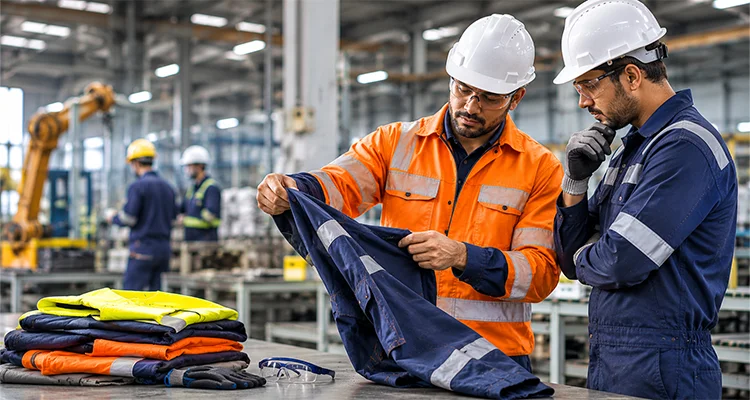
None of these features substitute for the correct fabric and rating. They determine whether workers wear the coverall correctly and consistently, which is where most real-world protection gaps actually occur. ACI Workwear’s FR & Arc Resistant Clothing range includes lighter coveralls built for mobility alongside heavier-duty options for more demanding conditions, reflecting this same trade-off between protection and wearability.
How Long Should FR Coveralls Last Before Replacement?
Quality FR and arc-rated garments commonly last around 12 to 18 months in typical industrial use, though actual lifespan depends heavily on wash frequency, exposure conditions, and how consistently care instructions are followed. This is a general industry range, not a fixed expiry date, and heavier exposure environments can shorten it considerably.
Regular inspection matters more than a calendar date. Fading, thinning fabric, damaged seams, or a coverall that no longer fits correctly after shrinkage are all signs it may no longer deliver its rated protection, even if it looks intact from a distance.
Correct washing and drying practices meaningfully extend usable life, particularly for treated FR fabrics. If your team is specifying coveralls for a large workforce and wants help balancing fabric choice, rating, and budget across an order, request a quote and ACI Workwear’s team can talk through the options.
Which FR Coverall Suits Which Industry?
The right coverall specification shifts depending on the primary hazard and operating environment. This table summarizes common starting points, though every selection should still be confirmed against a site-specific hazard assessment.
| Industry | Recommended Coverall Focus | Key Standard(s) |
| Oil & Gas | Flash fire protection, often with hi-vis for low-light zones | NFPA 2112, ASTM F1506 |
| Electrical / Power Generation | Arc-rated coverall matched to calculated incident energy | NFPA 70E, IEC 61482-2 |
| Chemical Processing | FR fabric with added chemical splash resistance | EN 13034, NFPA 2112 |
| Mining | Heavy-duty FR coverall, frequently combined with hi-vis | NFPA 2112, EN ISO 20471 |
| Heavy Engineering / Steel | Heat/flame protection selected for the actual radiant heat, sparks and molten-metal splash hazard | EN ISO 11612 |
Selection guidance for mining operations and heavy engineering sites follows the same underlying principle: match fabric and rating to the specific combination of hazards present, rather than treating FR coveralls as a single interchangeable product category.
Pre-Purchase FR Coverall Selection Checklist
- Confirm whether the hazard is flash fire, arc flash, or both
- Get the calculated incident energy level from a qualified safety assessment
- Match ATPV or TPP rating to that calculated exposure, not the highest number on the market
- Decide between inherent FR fiber and treated FR finish based on wash frequency and program duration
- Check whether hi-vis, anti-static, or chemical splash resistance is also required
- Confirm the relevant standard for your region (NFPA 2112 / ASTM F1506 in the US, EN ISO 11612 / IEC 61482-2 in Europe and the Gulf)
- Verify sizing accounts for base-layer wear and expected shrinkage
- Review design features (closures, pockets, single-piece construction) against the actual job tasks
- Confirm washing and care instructions are documented and followed
- Set an inspection schedule rather than relying on a fixed replacement date
Ready to Specify FR Coveralls for Your Workforce?
Tell us your industry, hazard type, required standard, fabric preference, customization needs, and order quantity to discuss the right FR coverall specification.
Request a Quote →Safety Standards Referenced in This Guide
- NFPA 2112: Flash fire protective clothing performance requirements
- NFPA 70E: Electrical safety standard covering arc flash PPE requirements
- ASTM F1506: Performance specification for arc-rated and flame-resistant textile materials
- IEC 61482-2: International standard for protective clothing against thermal hazards of an electric arc
- EN ISO 11612: European standard for clothing protecting against heat and flame
- EN 1149-5: European standard for anti-static and electrostatic dissipative protective clothing
- EN ISO 20471: European standard for high-visibility clothing
Conclusion
Getting an FR coverall specification right is rarely about finding the single “best” garment. It comes down to matching fabric technology, rating, fit, and secondary features to the hazards a worker actually faces on a given shift, then maintaining that protection through correct care and timely replacement. ACI Workwear manufactures FR and arc-rated coveralls across a range of fabric weights and constructions, from lighter options built for mobility to heavier-duty coveralls for more demanding sites, and the team can help align a specification to your site’s hazard assessment. Request a quote to discuss your requirements, or explore the full FR & Arc Resistant Clothing range to see the available options.
Frequently Asked Questions
1. What is the difference between an FR coverall and an arc-rated coverall?
FR describes flame resistance against flash fire and general thermal exposure. Arc-rated coveralls carry additional ATPV or EBT testing specifically for electric arc energy, so not every FR garment is automatically arc-rated.
2. How do I know what ATPV rating I need?
A qualified safety professional calculates the incident energy level for each task, and the coverall’s ATPV or TPP rating should meet or exceed that figure rather than being chosen by guesswork.
3. Should I choose inherent or treated FR coveralls?
Inherent fiber suits high-wash-frequency, long-term programs since protection cannot wash out. Treated finishes can work well with disciplined laundering and periodic verification, often at a lower upfront cost.
4. Can FR coveralls also meet hi-vis requirements?
Yes, many FR coveralls combine retroreflective trim referenced against EN ISO 20471 in a single certified garment, which is generally safer than layering a separate hi-vis vest over FR clothing.
5. How long do FR coveralls typically last?
Quality FR and arc-rated garments commonly last around 12 to 18 months in typical industrial use, though wash frequency, exposure severity, and care practices all affect actual lifespan.
6. What GSM (fabric weight) is best for an FR coverall?
There is no single best GSM. Heavier fabric generally supports higher ratings but reduces breathability, so the right weight depends on the calculated hazard level and shift conditions.
7. Do FR coveralls need to be replaced on a fixed schedule?
No. Regular inspection for fading, thinning fabric, damaged seams, and fit changes is a more reliable indicator than a calendar-based replacement date.
Related Reading