

How High Visibility Shirts Improve Worker Safety Across the US?
28/06/2025
The Ultimate Guide to Flame Resistant Clothing Standards in U.S. Workwear
22/07/2025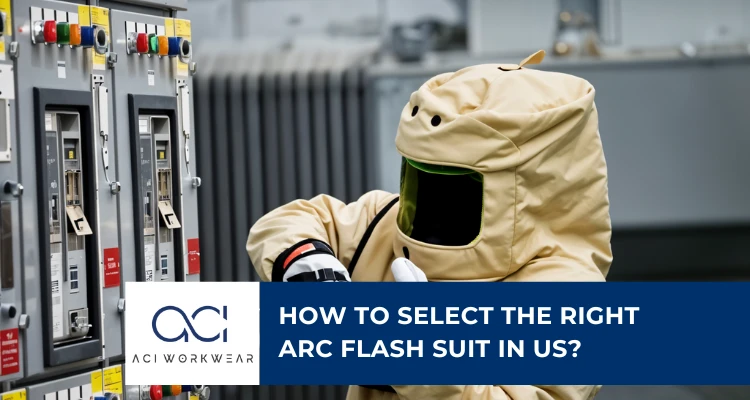
 Yash Agarwala
on
Yash Agarwala
on
Arc flash suits protect workers from electrical hazards by providing thermal protection rated in calories per square centimeter (cal/cm²). The right suit depends on your incident energy exposure level, with NFPA 70E categorizing protection into four levels: Category 1 (4 cal/cm²), Category 2 (8 cal/cm²), Category 3 (25 cal/cm²), and Category 4 (40+ cal/cm²). Choose based on your arc flash risk assessment, check ASTM F1506 compliance, and prioritize comfort for long-term wear.
With over 2,000 workers treated annually for severe arc flash injuries, selecting proper protective equipment is important for workplace safety. For safety managers, PPE distributors, and industrial buyers, choosing the right arc flash suit can mean the difference between a minor incident and a major injury.
ACI Workwear specializes in industrial safety workwear that matches regulatory requirements and real-world performance needs. Our FR workwear and flame-resistant clothing protect workers across oil & gas, mining, construction, and manufacturing sectors.
What is an Arc Flash Suit and Why Do You Need One?
An arc flash suit is specialized personal protective equipment (PPE) designed to protect workers from the thermal energy released during electrical arc flash incidents. Arc flashes appear when electric currents leave their intended paths and travel through the air to the closest conductor. When working in an electrical environment, the closest conductor is most often the worker.
These incidents release large amounts of energy—temperatures can reach 35,000°F, four times hotter than the sun's surface. The resulting explosion creates pressure waves, toxic gases, and melted metal projectiles that can cause severe burns, hearing damage, and even death.
Key components of arc flash suits include:
- Arc-rated coveralls or jacket/pants combinations
- Flame-resistant hood with face shield
- Arc-rated gloves and boot covers
- Hard hat and safety glasses
- Hearing protection
How Do NFPA 70E Categories Determine Your Suit Selection?
NFPA 70E 2024 categorizes arc flash protection into four distinct levels, each with specific minimum arc rating requirements and clothing specifications. Understanding these categories is important for proper suit selection.
Category 1: Basic Protection (4 cal/cm²)
Required Equipment:
- Arc-rated long-sleeve shirt and pants OR coverall
- Arc-rated face shield or arc flash suit hood
- Hard hat and safety glasses
- Heavy-duty leather gloves
- Leather footwear
Typical Applications: Low-voltage electrical work, equipment inspection
Category 2: Increased Protection (8 cal/cm²)
Required Equipment:
- Arc-rated shirt/pants or coverall
- Arc-rated flash suit hood or face shield with caps
- Hard hat and safety glasses
- Heavy-duty leather gloves
- Leather footwear
Typical Applications: Motor control center work, 480V panel operations
Category 3: Advanced Protection (25 cal/cm²)
Required Equipment:
- Arc-rated clothing system (multiple layers)
- Arc-rated arc flash suit jacket and pants
- Arc-rated hood
- Arc-rated gloves
- Hard hat and safety glasses
Typical Applications: High-voltage switchgear, transformer work
Category 4: Maximum Protection (40+ cal/cm²)
Required Equipment:
- Arc-rated flash suit jacket and pants (40+ cal/cm²)
- Arc-rated hood
- Arc-rated gloves
- All standard protective equipment
Typical Applications: High-energy electrical work, utility operations
What Testing Standards Must Your Arc Flash Suit Follow?
ASTM F1506 establishes the performance requirements for flame-resistant and arc-rated protective clothing, using two primary tests: the vertical flame test (ASTM D6413) for flame resistance and the arc rating test (ASTM F1959) for thermal protection.
ASTM F1506 Requirements
ASTM F1506-22 is the latest version, which includes revised labeling requirements guaranteeing only one arc rating appears on labels and updated lot testing requirements for fabric manufacturers.
Key Testing Parameters:
- Flame Resistance: Fabric must become extinct with char length of 6 inches or less after 25 washings
- Arc Rating: Measured thermal protection level at 50% probability of second-degree burns
- Mechanical Durability: Five additional tests for long-term performance
Compliance Verification
A garment that follows ASTM F1506 complies with OSHA 1910.269, NESC, and NFPA 70E requirements. Always verify:
- Proper labeling with arc rating
- Manufacturer certification
- Tracking codes for identification
- Care instruction compliance
How Do You Conduct an Arc Flash Risk Assessment?
Before selecting any arc flash suit, conduct a thorough risk assessment following NFPA 70E guidelines. This assessment determines the incident energy level your workers may deal with.
Step-by-Step Assessment Process
1. Identify Electrical Hazards
- Map all electrical equipment and systems
- Document voltage levels and fault currents
- Identify work tasks and proximity to energized equipment
2. Calculate Incident Energy
- Use engineering analysis or NFPA 70E tables
- Consider working distance and clearing time
- Account for protective device settings
3. Determine PPE Category
- Match incident energy to appropriate category
- Consider additional factors like arc duration
- Account for specific work procedures
3. Select Appropriate Suits
Choose arc flash suits that provide or exceed the required protection level while considering:
- Comfort and mobility requirements
- Environmental conditions
- Task duration and frequency
Which Materials Offer the Best Protection and Comfort?
The material segment includes cotton, nylon, polyester, and advanced materials like aramid fibers. Cotton offers natural flame-resistant properties and comfort, while nylon provides durability and abrasion resistance. Polyester offers toughness and flexibility for demanding environments.
Natural vs. Treated Materials
Natural Flame-Resistant (IFR) Materials:
- Built-in protection that won't wash out
- Consistent performance over garment lifetime
- Higher initial cost but better long-term value
- Examples: Nomex, Kevlar, modacrylic blends
Treated Flame-Resistant Materials:
- Chemical treatment applied to base fabric
- More affordable initial cost
- Protection may degrade over time
- Examples: Treated cotton, cotton-polyester blends
Modern Fabric Innovations
Recent advances include multi-layered systems providing better protection with increased comfort and mobility, breathable materials with moisture-wicking properties, and stylish designs with pre-bent knees and flexible sleeves.
What Are the Key Fit and Comfort Considerations?
Proper fit directly impacts both protection effectiveness and worker compliance. Ill-fitting suits can create gaps in protection or restrict movement, increasing accident risk.
1. Sizing Guidelines
- Chest: Measure around fullest part, add 4-6 inches for layering
- Height: Measure from the bottom to desired length
- Sleeves: Ensure coverage when arms are extended
- Overall length: Consider angles and reaching positions
2. Comfort Features to Consider
- Moisture-wicking liners for temperature regulation
- Ventilation systems for breathability
- Functional design for natural movement
- Lightweight materials to reduce fatigue
3. Mobility Requirements
Different work environments require various degrees of mobility:
- Confined spaces: Require flexible, lightweight suits
- Overhead work: Need unrestricted arm movement
- Extended wear: Demand maximum comfort features
How Do You Compare Top Arc Flash Suit Options?
What Are the Latest Industry Trends and Innovations?
The global arc flash protection market is experiencing important growth, valued at $2.72 billion in 2023 and expected to reach $5.9 billion by 2033, driven by increasing safety regulations and technological advancements.
Emerging Technologies
- Smart PPE: Integration of sensors for real-time monitoring
- Advanced Materials: Lighter, more breathable fabrics
- Modular Systems: Customizable protection levels
- Virtual Reality Training: Increased safety education
Market Drivers
Growth is driven by heightened regulatory standards, increasing workplace safety awareness, and technological advancements in safety equipment. Key factors include:
- Stricter OSHA enforcement
- Rising insurance costs for workplace injuries
- Improved safety culture in industrial sectors
- Global infrastructure development
How Should You Maintain and Inspect Arc Flash Suits?
Proper maintenance guarantees continued protection and extends suit lifespan. Standards require inspection before and after each use for damages including rips, tears, and contamination that could impact thermal protective characteristics.
1. Daily Inspection Checklist
- Visual examination for tears, burns, or wear
- Check all zippers, fasteners, and closures
- Inspect face shield for cracks or scratches
- Verify all labels and certifications are intact
2. Cleaning and Storage
- Follow manufacturer's washing instructions exactly
- Use recommended detergents and temperatures
- Air dry when possible to prevent heat damage
- Store in clean, dry environment away from UV light
3. When to Replace
Replace arc flash suits when:
- Any damage compromises protection
- Reaching manufacturer's recommended wash cycles
- Labels become illegible
- Industry standards change
Why Choose ACI Workwear for Your Arc Flash Protection Needs?
At ACI Workwear, we specialize in providing complete industrial safety workwear solutions for high-risk industries. Our wide range of FR workwear, including basic flame-resistant clothing and hi-visibility safety wear, meets the demanding requirements of oil & gas, mining, construction, and manufacturing sectors.
Our Advantages:
- ISO & CE certified workwear meeting international standards
- Custom OEM/ODM capabilities for specialized requirements
- Global exporter with proven supply chain reliability
- Technical expertise in flame-resistant fabric technology
Ready to enhance your workplace safety? Contact us today to discuss your specific arc flash protection requirements and learn how our industrial workwear solutions can protect your team.

Yash Agarwala
Associate Director – ACI Workwear
Yash Agarwala is a Associate Director at ACI Workwear, a company focused on manufacturing high-performance safety garments and industrial workwear. He is actively involved in scaling operations, improving manufacturing efficiency, and building global partnerships.