

Inherent vs Treated FR Clothing: Which Is Better for Industrial Workers?
27/07/2026
Industrial Workwear Buying Guide: How to Choose Safety Clothing for Your Workforce
20/08/2026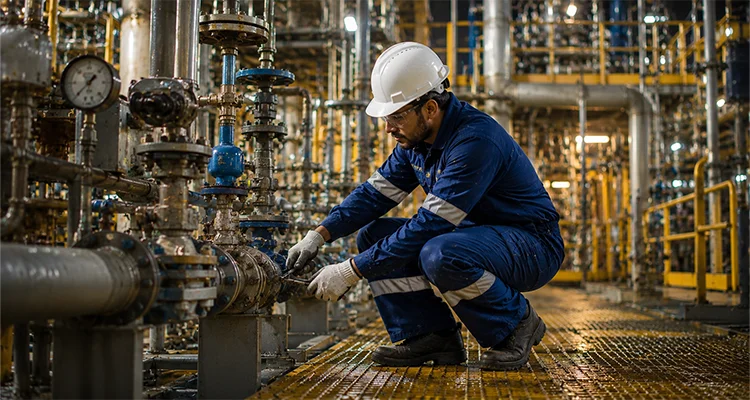
 Yash Agarwala
on
Yash Agarwala
on

Yash Agarwala
Associate Director – ACI Workwear
Yash Agarwala is a Associate Director at ACI Workwear, a company focused on manufacturing high-performance safety garments and industrial workwear. He is actively involved in scaling operations, improving manufacturing efficiency, and building global partnerships.
Flame-resistant clothing is not a one-size-fits-all choice. It depends on the hazard your workers face. Oil and gas crews need protection against flash fire and static sparks. Electrical technicians need a proven arc rating. Steel and foundry workers need protection against molten metal splash.
Buying the wrong FR type wastes budget. Worse, it leaves a real gap in protection. That gap only shows up during an actual incident.
This guide breaks FR clothing down by industry. It maps the standards each sector should check. It also covers climate, multi-hazard risk, and how to vet a supplier.
Key Takeaway
- FR clothing choice starts with the hazard, not the industry label — flash fire, arc flash, molten metal, and chemical splash each need different protection.
- Oil & gas and mining need inherent FR with anti-static (EN 1149-5) protection.
- Electrical work needs a proven arc rating matched to a site incident energy study, not a generic FR label.
- Construction and agriculture can often use treated FR safely when a proper wash-cycle and inspection schedule is followed.
- Multi-hazard sites need one multi-norm certified garment, not two separate FR pieces layered together.
- ACI Workwear manufactures certified FR and arc-resistant clothing for all eight industries, tested to NFPA 2112, EN ISO 11612, IEC 61482-2, or ASTM F1506.
What Determines the Right FR Clothing for Your Industry?
Three things decide the right FR clothing. First, the exact thermal hazard at your site. Second, the safety standard your regulator or client requires. Third, how often workers face that hazard during a shift.
A flash fire hazard is not the same as an arc flash hazard. Both are thermal risks, but they call for different protection. Molten metal splash in a steel plant is different again. It needs reinforced, high-heat panels, not a light everyday FR shirt. Treating all three as one generic “fire protection” need is the most common sourcing mistake buyers make.
Before you order FR workwear, run a short hazard check for each role. Ask what ignition source exists. Ask how often the worker faces it, and for how long. Ask what other gear needs to layer on top — hi-vis, anti-static, or chemical-resistant. That layer must not break the FR rating. Your answers point to the right standard, fabric, and design. A generic FR label that “technically qualifies” often misses the real risk.
How Does FR Clothing Selection Differ Across Industries?
Every industrial sector ACI Workwear supplies has a distinct hazard profile. The table below maps the primary risk, the applicable standard, and the recommended FR approach for each.
| Industry | Primary Hazard | Key Standard(s) | Recommended FR Approach |
| Oil & Gas | Flash fire, static-triggered ignition | NFPA 2112, ASTM F1506, EN 1149-5 | Inherent FR with anti-static finish |
| Mining | Sparks, coal dust ignition, low visibility | NFPA 2112, EN ISO 20471 | Inherent FR with integrated hi-vis |
| Railway | Trackside arc exposure, weather extremes | EN ISO 11612, EN ISO 20471, EN 343 | FR + hi-vis with weatherproof outer layer |
| Construction | Welding sparks, electrical contact | EN ISO 11612, NFPA 70E (where electrical) | Treated FR cotton blend |
| Chemical | Flash fire plus chemical splash | NFPA 2112 / EN ISO 11612, EN 13034 | Multi-norm inherent FR |
| Electrical | Arc flash | NFPA 70E, ASTM F1506, IEC 61482-2 | Inherent FR, documented ATPV rating |
| Steel / Heavy Engineering | Molten metal splash, radiant heat | EN ISO 11612, EN ISO 11611 | Heavyweight inherent FR, aluminized option |
| Agriculture | Intermittent flame/heat, machinery | EN ISO 11612 (where required) | Treated FR cotton, comfort-first |
Oil & Gas: Flash Fire and Static Ignition
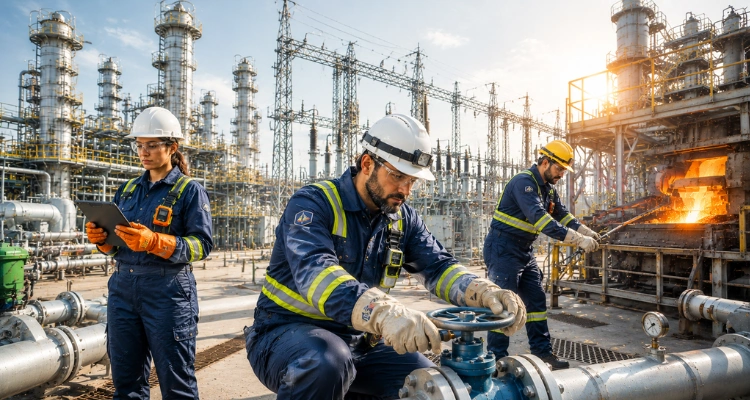
Refinery, drilling, and pipeline workers face flash fire risk from gas vapors. Garments should carry NFPA 2112 certification. They also need an anti-static finish meeting EN 1149-5. Static sparks alone can ignite vapor near a wellhead or tank, even with no open flame nearby. Full body coveralls in inherent FR fabric are the standard choice here. They close the waist gap that a separate shirt-and-pant set can leave open.
Mining: Sparks, Dust, and Low Visibility
Underground and open-pit mining brings fire risk and poor visibility together. FR coveralls with built-in reflective striping solve both problems in one garment. Look for a flame standard paired with EN ISO 20471 for visibility. Reinforced knees and abrasion panels matter too, given the crawling and rock contact involved in the work.
Railway: Trackside Arc Exposure and Weather
Railway maintenance crews work near overhead power lines and in tough weather. FR clothing here usually pairs EN ISO 11612 flame protection with EN ISO 20471 visibility. Add a waterproof or insulated outer layer for trackside conditions. Layering matters most in winter. Every layer, from base to shell, must keep the certified protection level intact.
Construction: General Fire and Electrical Contact
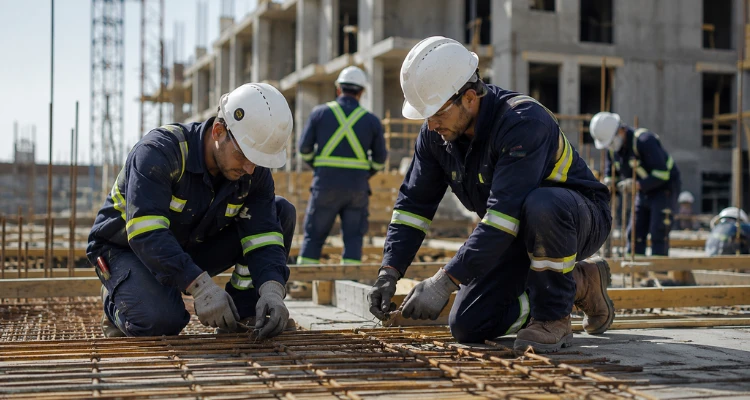
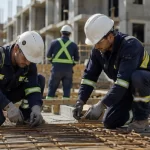
Construction sites carry moderate, on-and-off fire risk from hot works, welding, and electrical panels. Treated FR cotton blends usually work well here. Just replace the garment on the manufacturer’s wash-cycle schedule. Sites with a dedicated electrical crew should give that crew NFPA 70E-rated garments. Don’t apply one FR standard across the whole site.
Chemical Processing: Flash Fire Plus Chemical Splash
Chemical plant workers need protection from two hazards at once. Choose a garment certified for both flame and EN 13034 chemical splash resistance. A single-hazard garment leaves a real gap here. If solvent or acid exposure happens often, add a chemical-splash outer layer over an inherent FR base layer.
Electrical: Arc Flash Above All
Electrical and utility workers need arc-rated clothing. Look for a proven ATPV, tested to ASTM F1506 or IEC 61482-2. Match the rating to your site’s incident energy study under NFPA 70E. Don’t rely on a generic FR label. High-voltage substation work needs a higher rating than routine panel checks. One site can fairly need two or three arc-rated garment tiers.
Steel & Heavy Engineering: Molten Metal and Radiant Heat
Foundry and steel mill work needs heavier fabric. In extreme radiant-heat roles, add an aluminized outer layer. EN ISO 11612 covers general heat and flame. EN ISO 11611 covers welding-adjacent tasks specifically. A snug, non-catching fit matters as much as the flame rating around rolling and casting equipment.
Agriculture: Intermittent Exposure, Comfort First
Farm machinery operators face flame risk less often. But it’s still real, near fuel, welding repairs, and electrical gear. Treated FR cotton is usually the right fit here. Choose breathable fabric with free movement for long, hot days in the field.
Which Safety Standards Should You Check Before Buying?
| Standard | Region | Hazard Covered |
| NFPA 2112 | United States | Flash fire |
| NFPA 70E / ASTM F1506 | United States | Arc flash |
| EN ISO 11612 | Europe, UK, and internationally referenced | Heat and flame |
| IEC 61482-2 | International | Arc flash |
| EN 13034 | Europe | Limited chemical splash |
| EN 1149-5 | Europe, internationally referenced | Electrostatic (anti-static) properties |
| EN ISO 20471 | Europe, internationally referenced | High-visibility performance |
Always ask your supplier for the real test report behind any certification claim. Don’t settle for a printed standard number alone. A genuine report names the test lab, the test date, and the fabric batch. A label by itself doesn’t prove the garment in your hand matches the garment that was tested.
Not sure which standards apply to your site? Contact ACI Workwear’s export team for a technical review.
Inherent or Treated FR — Which Fits Your Industry’s Risk Level?
Inherent FR fabric has flame resistance built right into the fiber. The protection lasts the life of the garment. It’s the stronger pick for high-frequency exposure — oil & gas, mining, chemical, and steel work.
Treated FR fabric costs less upfront. It suits construction, agriculture, and other lower-exposure roles well, as long as you enforce a wash-cycle inspection schedule.
For the full technical breakdown, see ACI Workwear’s guide to inherent vs. treated FR clothing.
What Other Factors Matter Beyond Industry Classification?
Climate changes the fabric-weight call. Hot, humid sites need lighter, breathable FR weaves. Cold-climate sites need insulated FR layers. Every layer must keep its protection, not just the outer shell.
Multi-hazard sites need multi-norm garments. A petrochemical worker often faces both arc flash and flash fire risk. That worker needs one certified garment, not two separate FR pieces that were never tested together.
Anti-static protection under EN 1149-5 matters wherever flammable vapors or dust exist. This holds true even if open flame is rare. Plain synthetic fibers can build up a static charge strong enough to ignite vapor. A plain FR-rated garment, with no anti-static layer, won’t stop that.
What Mistakes Do Procurement Teams Make Across Industries?
Treating “FR-rated” as one fixed level of protection
A garment certified for flash fire doesn’t cover arc flash automatically, and the reverse is also true. Match the certification to the exact hazard, not the general FR category.
Picking fabric weight without checking climate or shift length.
A heavy FR garment built for a cool steel mill can cause heat stress in a hot oil field. Comfort failures become safety failures. Overheated workers are more likely to unzip or remove their gear.
Skipping anti-static protection in vapor-risk sites
Teams focus on the flame rating and forget EN 1149-5. But static ignition is a real, documented cause of incidents in oil & gas and grain-handling sites.
Buying on a certificate number alone a certificate number alone
A standard reference printed on a product page isn’t proof. Ask for the real test report before you place a bulk order.
Using one FR spec for the whole site
A construction site with an electrical subcontractor crew needs role-specific gear. One blanket order for every worker won’t fit every risk.
How Do You Evaluate an FR Clothing Manufacturer?
Picking the right garment is half the job. Picking a manufacturer who can prove compliance, not just claim it, is the other half.
Look for a manufacturer that shares real test documentation for every claim, not just a logo in a website footer. Ask how they run quality checks at each stage, from fabric to final inspection. Ask if they welcome factory audits on bulk or export orders.
Export experience matters if you’re sourcing across borders. A supplier with real international clients has usually already solved the documentation and logistics issues you’re about to face.
ACI Workwear is an ISO 9001:2015-certified industrial workwear manufacturer and certified safety clothing exporter. It supplies FR and arc-resistant clothing to clients across 25+ countries and 15+ industries. Its solar-powered facility makes 100,000+ garments a month. It’s a family-owned business, running since 2000, with a dedicated workwear division since 2011. ACI provides full traceability documentation on every certified FR garment.
Industry-Specific FR Clothing Selection Checklist
- Confirm the specific hazard: flash fire, arc flash, molten metal, or chemical splash.
- Match the certification to that hazard. Don’t rely on any general FR label.
- Check the arc rating (cal/cm²) against your site’s incident energy study, where it applies.
- Pick inherent FR for steady, daily exposure. Pick treated FR for occasional, budget-conscious roles.
- Add anti-static (EN 1149-5) certification wherever flammable vapors or dust exist.
- Pair FR with hi-vis (EN ISO 20471) for low-light, roadside, or trackside work.
- Match the fabric weight to your site’s climate and shift length.
- Ask your supplier for the real test report, not just a certificate number.
Need FR workwear specified and quoted against this checklist? Request a quote from ACI Workwear.
Frequently Asked Questions
1. How do I choose FR clothing for my specific industry?
Start with a hazard check: flash fire, arc flash, molten metal, or chemical. Then match the certification and fabric to that exact risk.
2. Does every industry need the same level of FR protection?
No. Oil & gas and electrical work usually need inherent, higher-rated FR. Construction and agriculture often do fine with treated FR.
3. What arc rating do I need for electrical work?
It depends on your site’s incident energy study under NFPA 70E. Ask for a garment with a proven ATPV that matches that study, not a generic FR label.
4. Can one FR garment work across multiple industries?
Only if it’s certified for every hazard present. One single-standard garment leaves a gap if your site has, say, both flash fire and chemical splash risk.
5. Is anti-static (EN 1149-5) certification necessary for oil & gas work?
Yes, wherever flammable vapors or gases exist. A static spark alone can ignite vapor, with no flame needed.
6. What’s the difference between US and EU FR clothing standards?
The US relies mainly on NFPA 2112 and NFPA 70E/ASTM F1506. The EU and UK use EN ISO 11612 and IEC 61482-2 for the same hazards.
7. How often should industry-specific FR clothing be replaced?
Inherent FR lasts the life of the garment if it stays structurally sound. Treated FR needs a check every 25–50 wash cycles, then retirement on schedule.
Read More: